Finally thin?

What taking GLP-1 medication taught me about food, time, and myself.
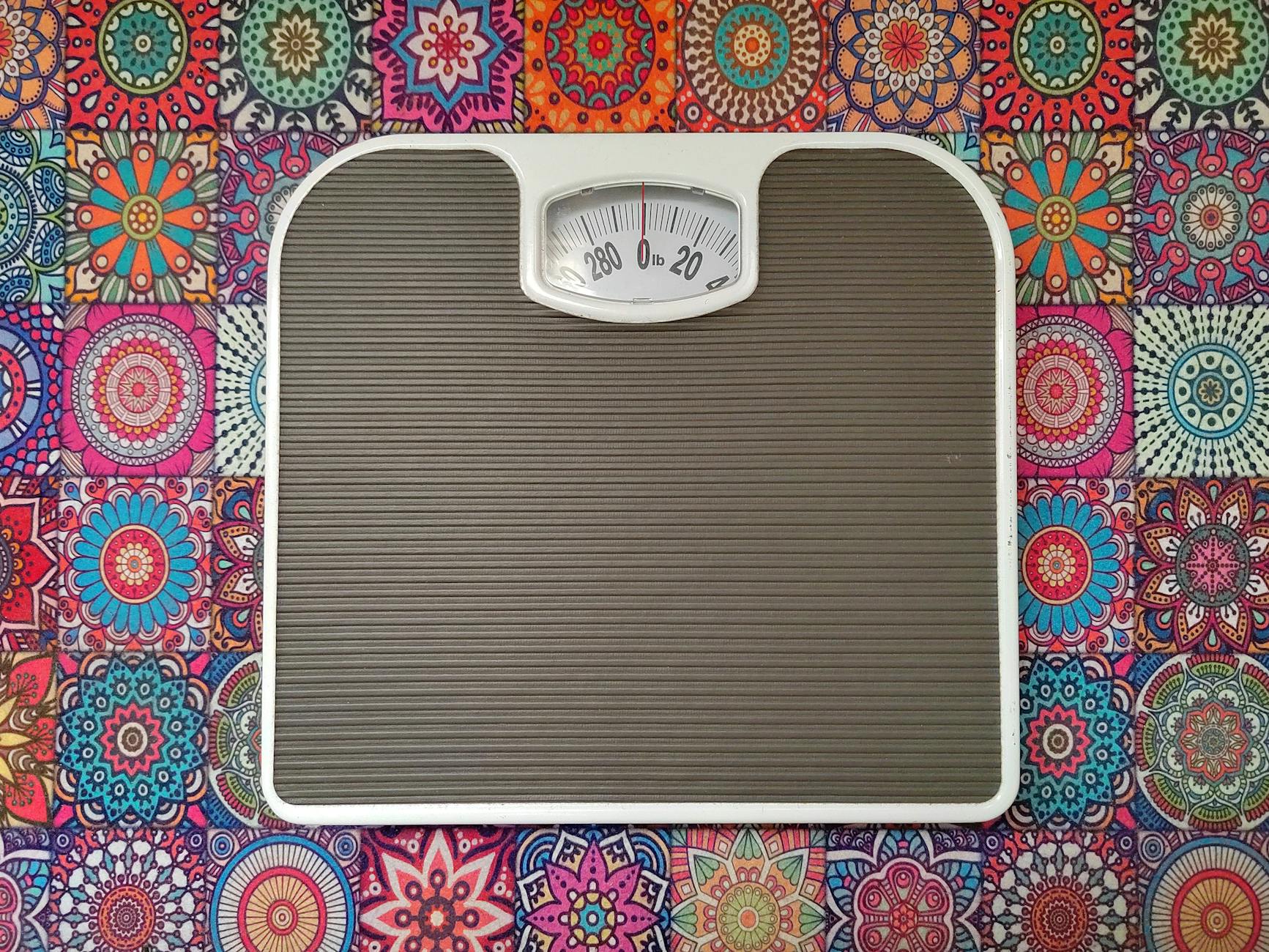
Photo by Renee B on Pexels.com

I’m one of those early deriders of GLP-1 medication. Convinced entirely that this miracle solution, is nothing more than a passing fad. The people who were going to lose weight would do it anyway, those that weren’t would ultimately fail.

Then what happened? More people in my life started taking the medication, all saying the same thing. Their lifetime of thinking non-stop food thoughts, gone in an instant. What would that even feel like? A huge emotional void where the snacks used to be? Well, not quite.

By the end of 2024, I was firmly in the curious camp. No, I was telling Rob, my long suffering partner, I was going to take the leap. Eventually. I just needed a reason, something to push me in the right direction and finally complete the now infamous online consultation. After all, I want to be absolutely sure if I’m going to subject myself to what practically amounts to ritual humiliation.

For those not in the know, most online pharmacies or telemedicine services require you to take various unflattering photos of your body, as well as evidence of you tipping the scale into ungodly numbers. Don’t worry – you can always ask a friend or family member to do this for you, so you can keep your eyes firmly closed.

Given I still hadn’t received an engagement ring, or any wedding invitations for that matter, it was time to just bite the bullet. And that I did. Within the hour, the doctor had reviewed my information and prescribed my requested medication. Now it was real.

I won’t bore you with me injecting myself at the kitchen counter, but any needle-phobic readers, a loved one can always jab you in the back of the arm if you’ve not got the stomach to stab your tummy or thighs.

The following week, I spent waiting for side effects. Side effects that, for the most part, so far, never came. Thank God. What did come was even more horrifying though. A mortifying realisation that without the ‘Food Noise’ as it is often called, I felt like I had about 12 extra hours a day. Had I really lost that much time, for most of my life, just thinking about food?

When I was 17, after a childhood and adolescence of being overweight, I decided to join the local gym. Freshly equipped with money from my very first job, it became my soul focus. Every hour of the day, I spent hungry and googling which snacks were the lowest in calories. Coming across as much borderline problematic weight loss content as you can imagine.

Life went from spending time with friends, eating pizza and Oreos, to, in all honesty, a lot of isolation. I lost weight by removing myself, almost entirely, from any social situation I couldn’t spend counting the calories and constantly moving. This new distraction meant I did so poorly in school, I failed my AS Levels. Resulting in me leaving school, and starting the whole process again the following autumn at my local further education college.

Come September, a few months before I turned 18, things had improved slightly. A new setting had shocked me out of my all-consuming calorie counting. Instead, it went to the back burner. I could get essays written, I’d just have to think about food on my breaks. Or I could have snacks, I’d just have to walk home instead of getting the bus.

I did well, went to university, had a great time, and put all the weight back on. Spending most of my twenties, back in the overweight body I’d starved myself to get rid of. Unable to imagine how this could ever possibly end, I tried every fad diet you could think of.

There was not a chance in hell I could imagine ever feeling the way I do, right now, as I write this; completely and unimaginably unbothered by food.

Finally, for the first time in my life am I able to just eat breakfast, lunch and dinner – as well a small mid-morning snack with my coffee. Proper, healthy portions, of nutritious food, without even once thinking about what I was going to have between meals.

So, as all the talk of the rising cost of Mounjaro bubbles away on daytime television, and entire forums of fellow jabbers spiral that this peace of mind might be snatched out of their hands, I beg of you one thing. For those who don’t struggle with the near constant weight of food noise, have some compassion for those of us that do. This whole, being normal about eating thing is new to many of us. It’s something we never imagined might be possible for ourselves. Something, I pray, you never have to deal with.
Zero Waste – 1 Month Update

So, how’s it going?

Photo by Adrienne Andersen on Pexels.com

Well, not as poorly as I’d worried. But not as good as I’d hoped.

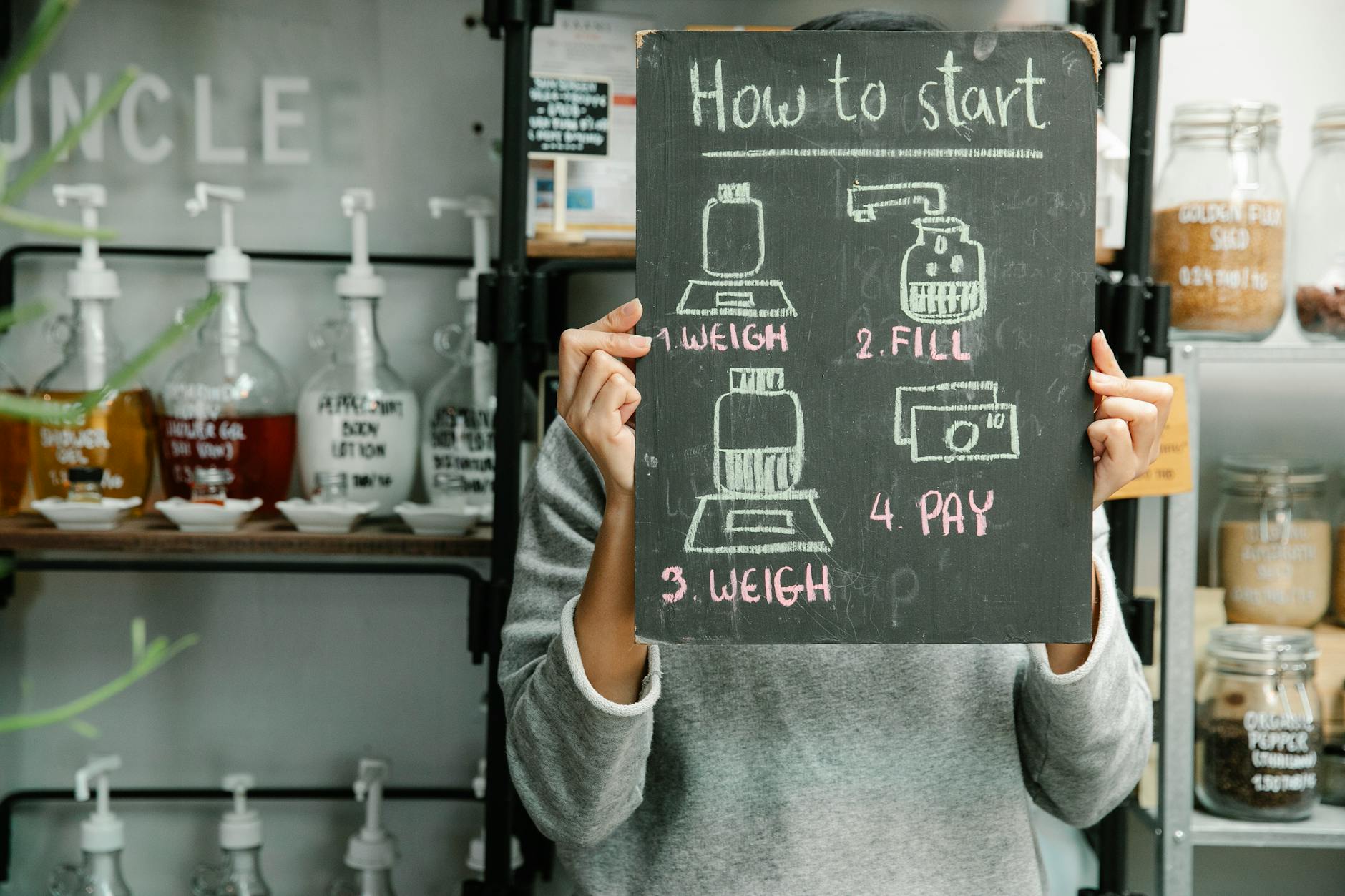
Let’s begin with the struggles, because getting this out the way might help me feel better. Why does it cost so much to refill things? Initially, my impression of the refill shop wasn’t so bad. I was purchasing the refillable bottles, making an investment that would help me save money in the long run. By my second visit, I couldn’t help but wonder why one refill of laundry detergent (in a very small bottle) would cost so much more than one of the main brands washing powder (which comes in a large cardboard box). This is the kind of price disparity that makes doing the right thing and making environmentally conscious choices, very difficult.

But then I got to thinking – am I comparing the right products? Because my favourite liquid laundry detergency that comes in a plastic bottle is £10 in ASDA this week. Compared to that, it’s not so bad. But when an alternative product comes in a (very) recyclable cardboard box, for less than half the price, perhaps the responsible choice is the buy that instead.

I think this is the sort of issue that might come down to the limited brand choice we have when refilling items. So, I’m trying to be open minded about this. There are some products I love that I can’t find, or find in eco-friendly packaging, elsewhere. There are some that the refillable version isn’t economically or even sustainably worthwhile. So, I need to find the balance.

Photo by Sarah Chai on Pexels.com

There is a tendency to think of amending goals as giving in or failing. But I think when you’re trying to make meaningful change, making sure your decisions are personally sustainable, not just environmentally sustainable, is where the real battle lies. You’re going to do no good for yourself or the planet if you burn out quickly. That early period of adjustment is where you do all the experimenting, figuring out what works, what doesn’t, and where your red lines are.

The perfect example of the refill shop introducing me to a very sensible eco-friendly swap is white cleaning vinegar.  Gone are the days of fabric softener, I’m telling you. White vinegar has my washing machine smelling fresh, my clothes soft, and my oven spotless. And don’t get me started on how perfect it is for washing the cats tiny little nose smears and paw prints off the windows.

But I must caveat this with the fact that washing powder has a major advantage over liquid detergent – and that’s the inclusion of sodium percarbonate (the ‘per’ meaning peroxide). Hydrogen peroxide is fabulous for also keeping your washing machine fresh – and if you’re dealing with acne (or folliculitis), switching from liquid to powder in your washing machine may make a huge difference. AND be the sustainable swap you’ve been overlooking.

December Reading

Well, besides buying presents for the cats (their first Christmas with us), and enjoying all the little flurries of snow we’ve had, I’ve also been quite busy reading.

2024 was a great year for reading for me, I managed my goal of 52 books. This is always my goal as it toes the line of being ambitious but still realistic. As someone with a fairly intense full time job, and other hobbies, this has always been my sweet spot. A goal I didn’t quite manage was finding 4 Christmassy books for December. But listen, I’ve never been good at planning my reading. Something always catches my eye at the Library or in Kindle Unlimited that I can’t help but keep it spontaneous.

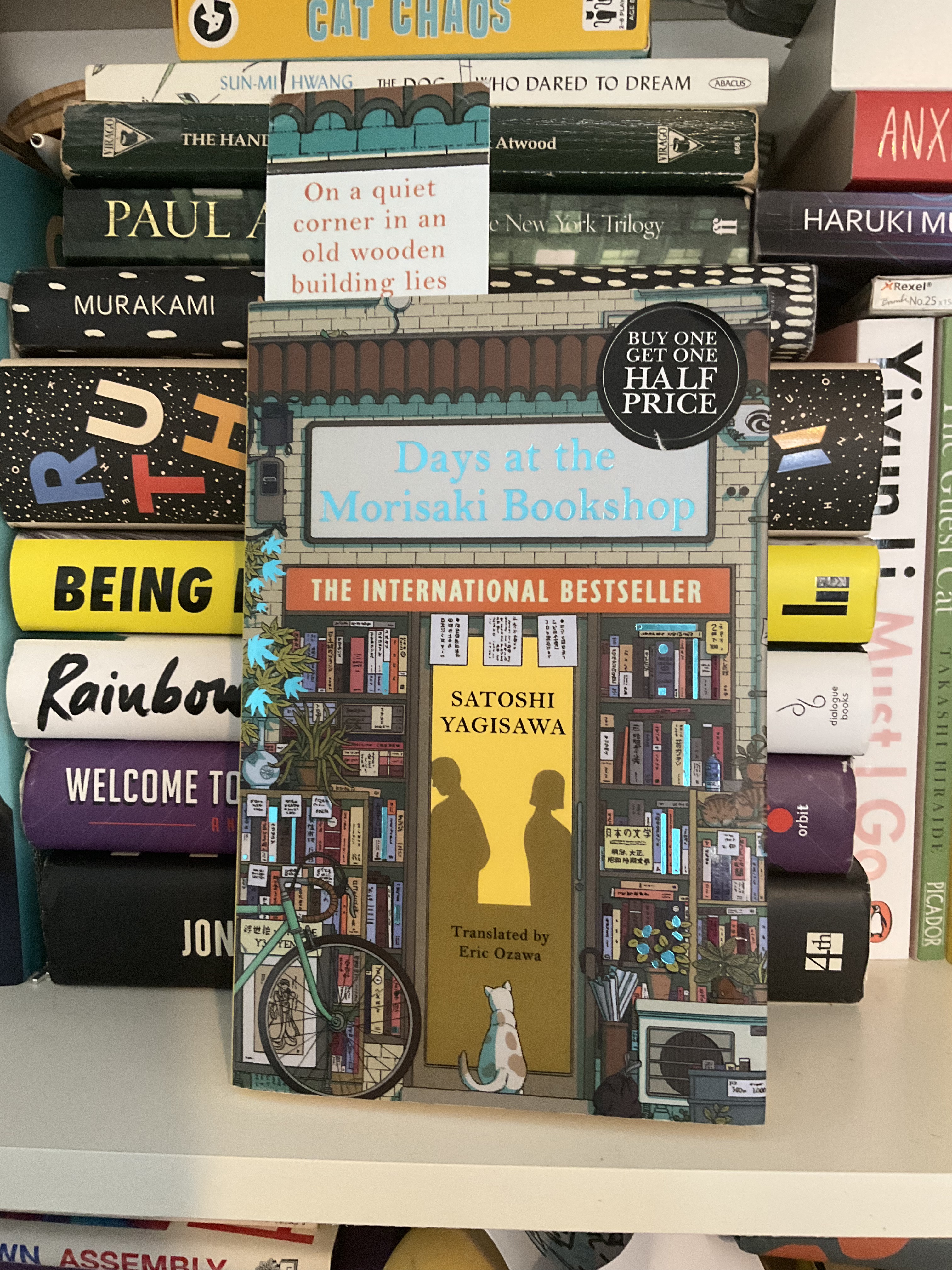
One of my favourites was Days at the Morisaki Bookshop by Satoshi Tagisawa. I just loved it. It managed to give me exactly the cosy hit I was looking for, without losing itself in the kitsch. It had a moving plot, driven by the complex lives of the characters. Broken hearts and a place to heal are at the core of this novel.

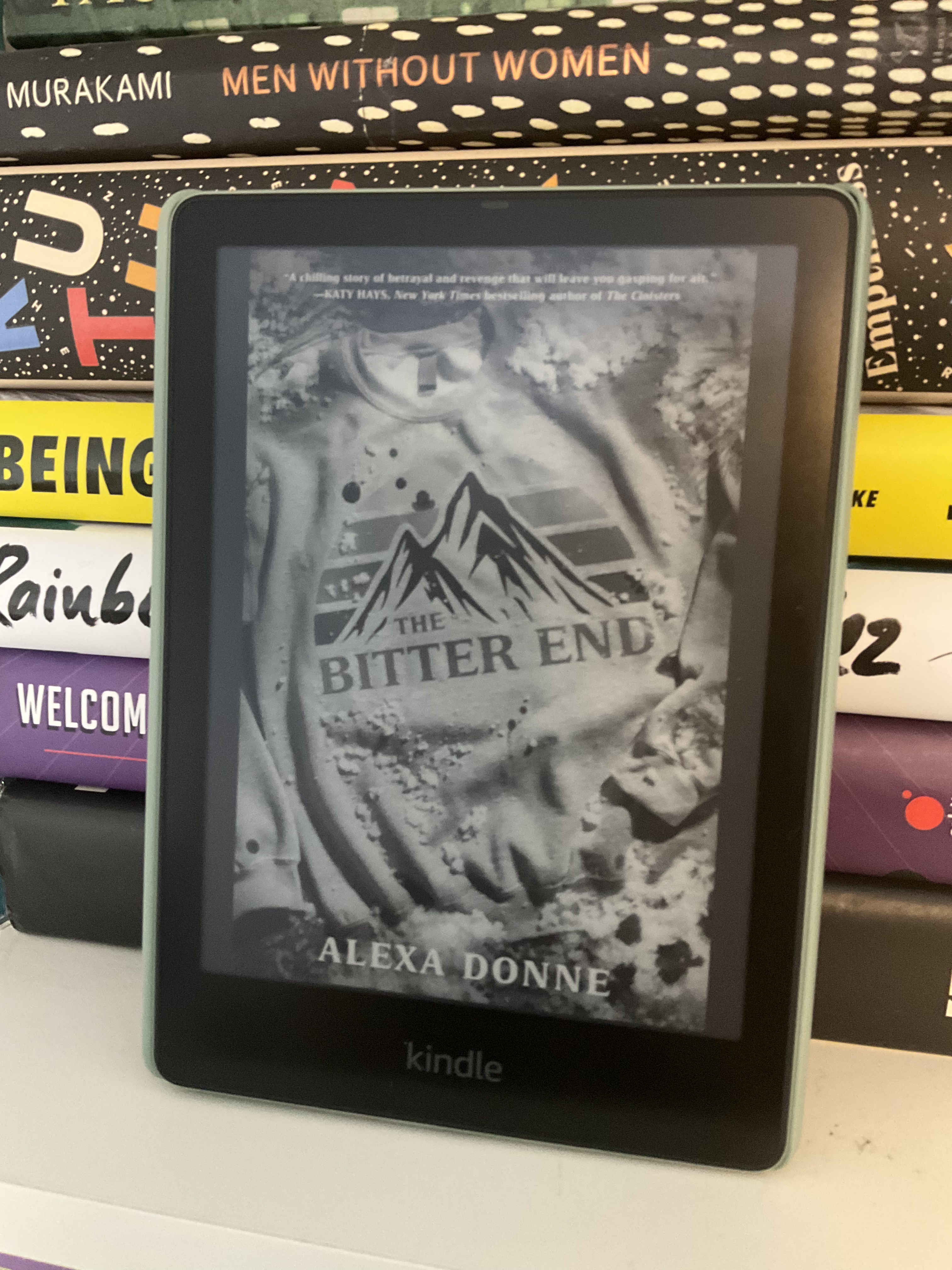
The Bitter End by Alexa Donne was hugely enjoyable. I love a murder mystery in any form, but drop a host of rich, entitled high-schoolers about to head off to college into an isolated location and you know they’re about to drop off like flies. Donne has always proudly been a capital Y and A young adult author, and you’d be hard pressed to find anyone writing in the genre progressively becoming more ambitious and sharply tuned to wider social issues. She reminds me a lot of the British author Juno Dawson, who similarly writes complex young adults, unafraid of wading into the dark and often sinister realities of today’s world. There is no coddling, no sugar coating, and it’s somehow still massively grounded – even as things escalate by the second. A fun, murderous romp with a massive impact.

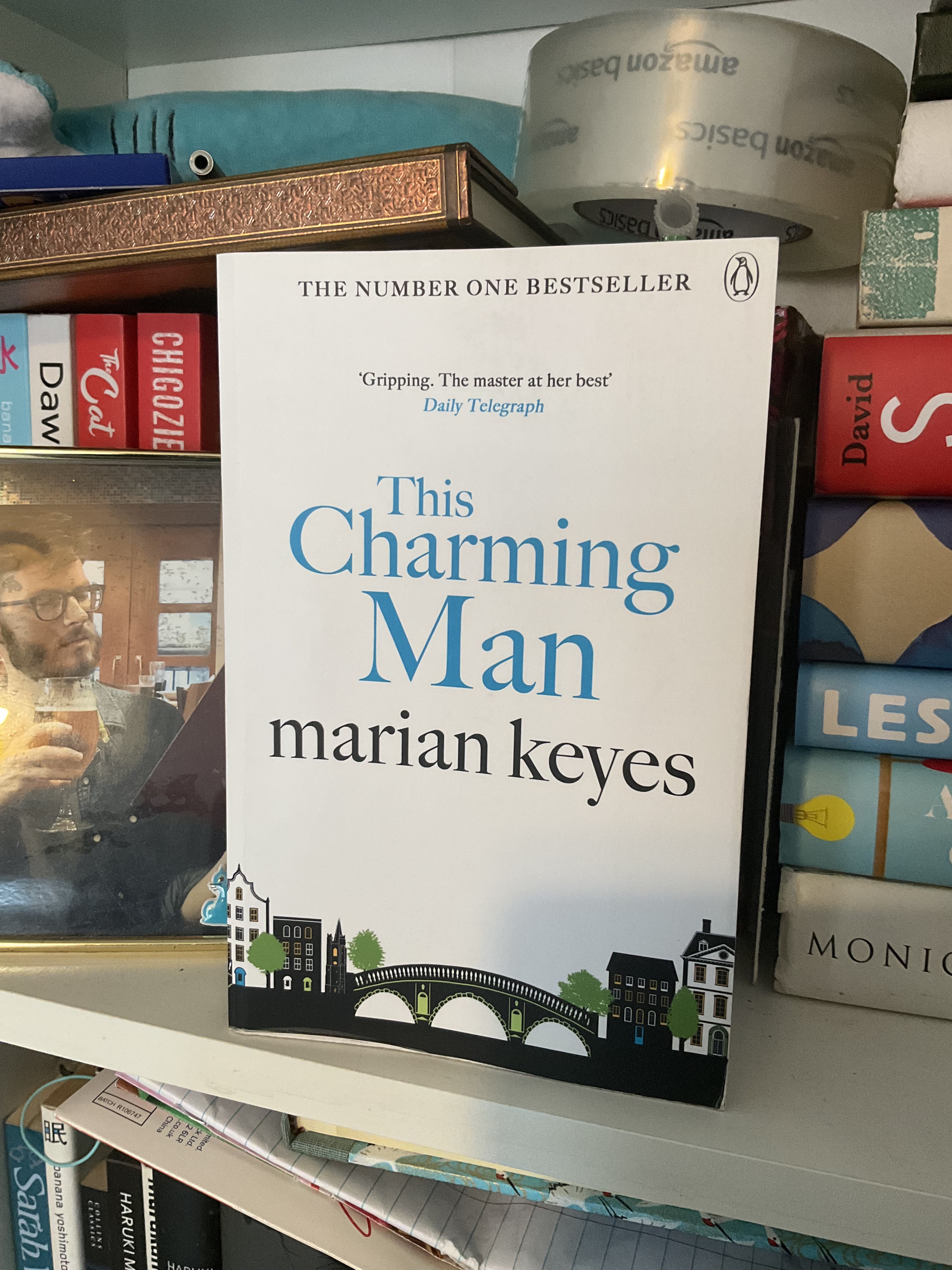
This Charming Man by Marian Keyes was the only book of hers I hadn’t yet read. I came onto Keyes’ books during the pandemic, when I was grateful for their epic lengths and the dose of hilarious escapism they offer. Somehow, I’d missed this one, though I suspect in part because I knew it had a relatively weighty core plot. A politician wreaking havoc in the lives of the women he abuses. I don’t think I’ve ever encountered a writer who can so comfortably inject humour into the darkest of themes, without ever once seeming insensitive about how she handles them. Yes, this is a book about domestic violence. But it’s also a story of survivors healing and finding each other. You know you’re in safe hands with Marian Keyes because no matter what, she never lets the sense of hope die. Even deep in the weeds, you know you’ll be safely delivered out the other side eventually.

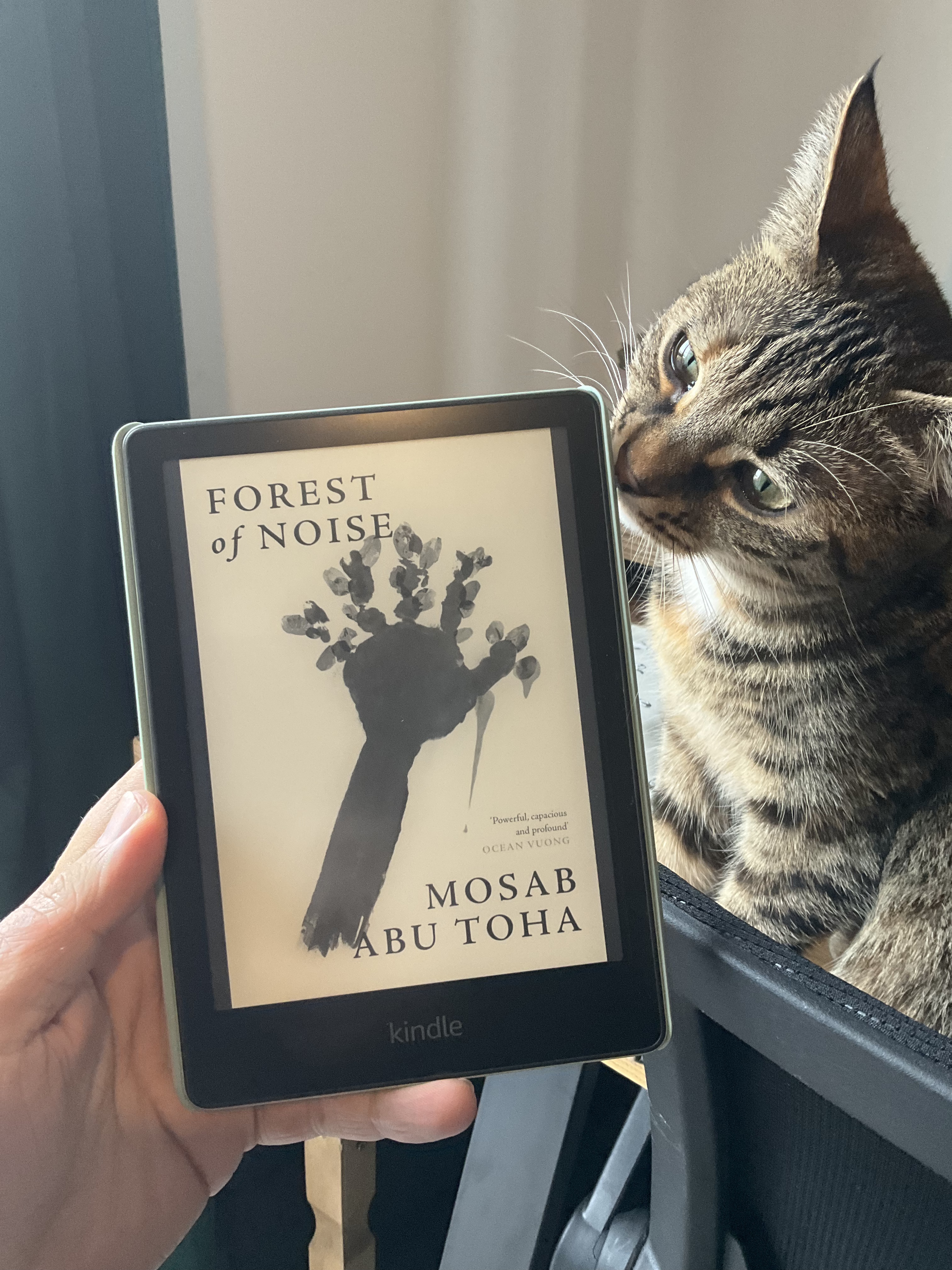
Forest of Noise by Mosab Abu Toha. First published at the beginning of 2024, this is an essential collection of poems for anyone looking to understand the reality of life under occupation. A work I believe has the potential to reveal important truths better than any social media post, news story, or documentary. For the author to have offered up his family’s lives in such a generous way, immortalising them so beautifully, is quite simply the gift he’s able to give them even if they are no longer here to tell their own story.

The collection allows its readers into the uncertainty of life in refugee camps, of not knowing where your loved ones ended up. Of not being able to contact them, or know whether they are still alive. There is a daily reminder, no matter how beautiful your homeland or the lives you’ve rebuilt together after such frequent destruction, how temporary it all might be. It spares nothing in presenting the hope and pain found amongst the rubble, the communities searching for survivors, giving everything they have to care for one another – of a people who will not allow themselves to disappear.

Buying crap

In the lead up to the most relaxed Christmas Rob and I have had in years, a simple question began to reoccur everywhere we meant. Do we need this? And often the answer was, you guessed it, no.

Where does the instinct come from to consume as much as possible over Christmas? The chocolates, the desserts, and a new one for me, candles with built in LED lights that come on when you light them. Seriously, don’t candles already light up enough? When the urge to buy takes over, I become a MONSTER.

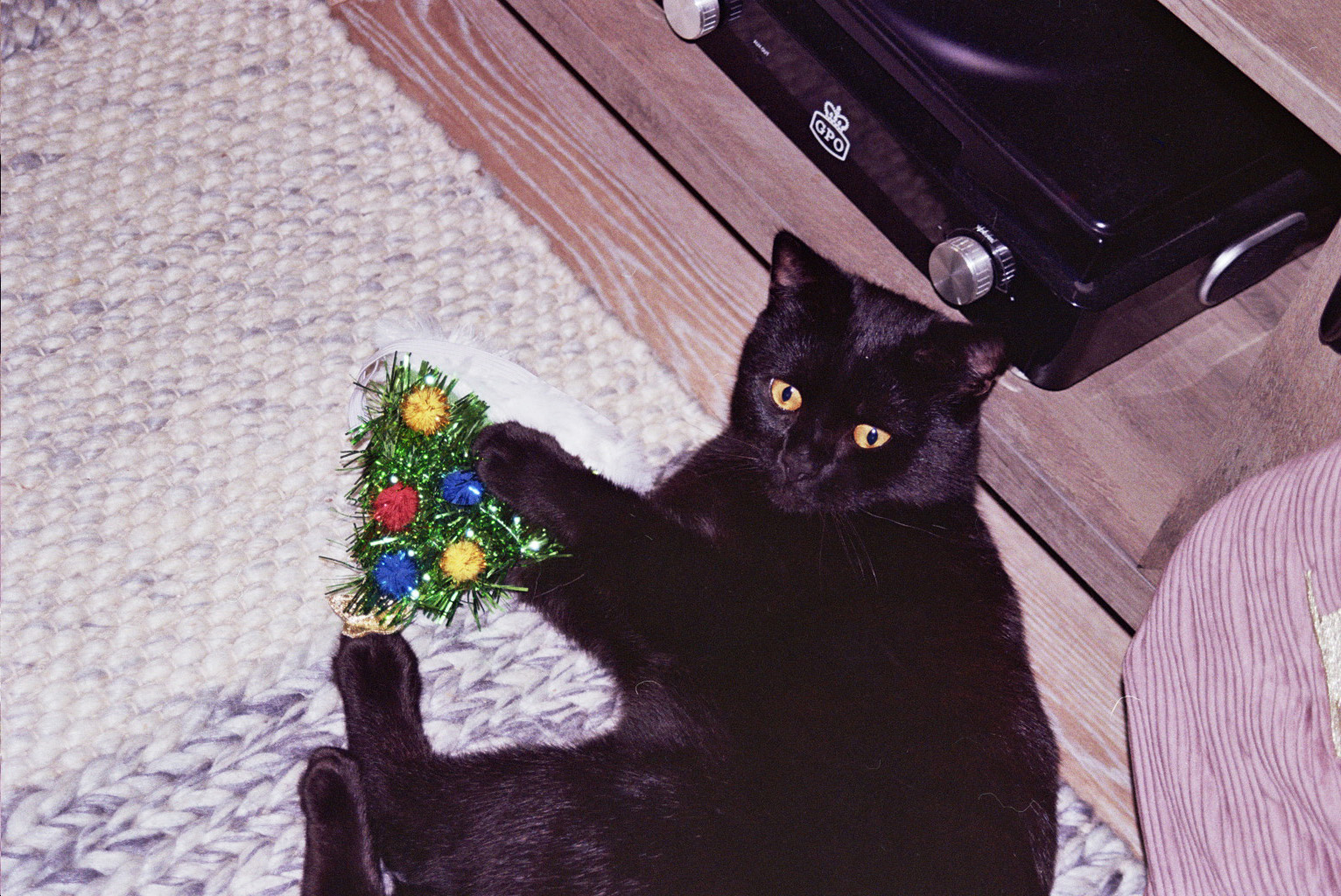
Wilbur, caught attacking the christmas decorations at every opportunity.

I started thinking about my upcoming new year’s resolution quite early this year. I wanted to spend less, and put more into our savings. After a culmination of what I’m going to call multiple blackout ‘spending events’ – I realised how out of control I’d become. My impulse control for buying crap had always been low. But in 2024, it was non-existent.

My latest obsession – maybe even hyper fixation – was on cordless vacuums. Allow my own behaviour to a cautionary tale. My last vacuum was a fabulous little rechargeable thing. It was tiny, didn’t take long to replenish the battery, and did a pretty good job of keeping the tiny flat we used to rent relatively clean. However, when it came the end of its life, far too quickly in my opinion (after about 3 years of use), I decided to opt for a slightly more expensive corded alternative. My Shark vacuum has not only saved me money in the long-run as it doesn’t require the little bags my rechargeable one did, but it also does a much better job of cleaning. My rugs and carpet look gorgeous after a 15-minute whip round. And better yet, I’m not creating more e-waste as the lithium-ion battery begins a quick descent into uselessness.

But there I was, convinced that now we have two cats, and the need to clean more regularly than before, what I desperately wanted was something that I could whip out to do the little daily touch ups my home needed to stay fresh. And keep the cat hair at a manageable level. Despite the fact, I already have a much better vacuum cleaner – that albeit a bit heavier – works wonderfully well.

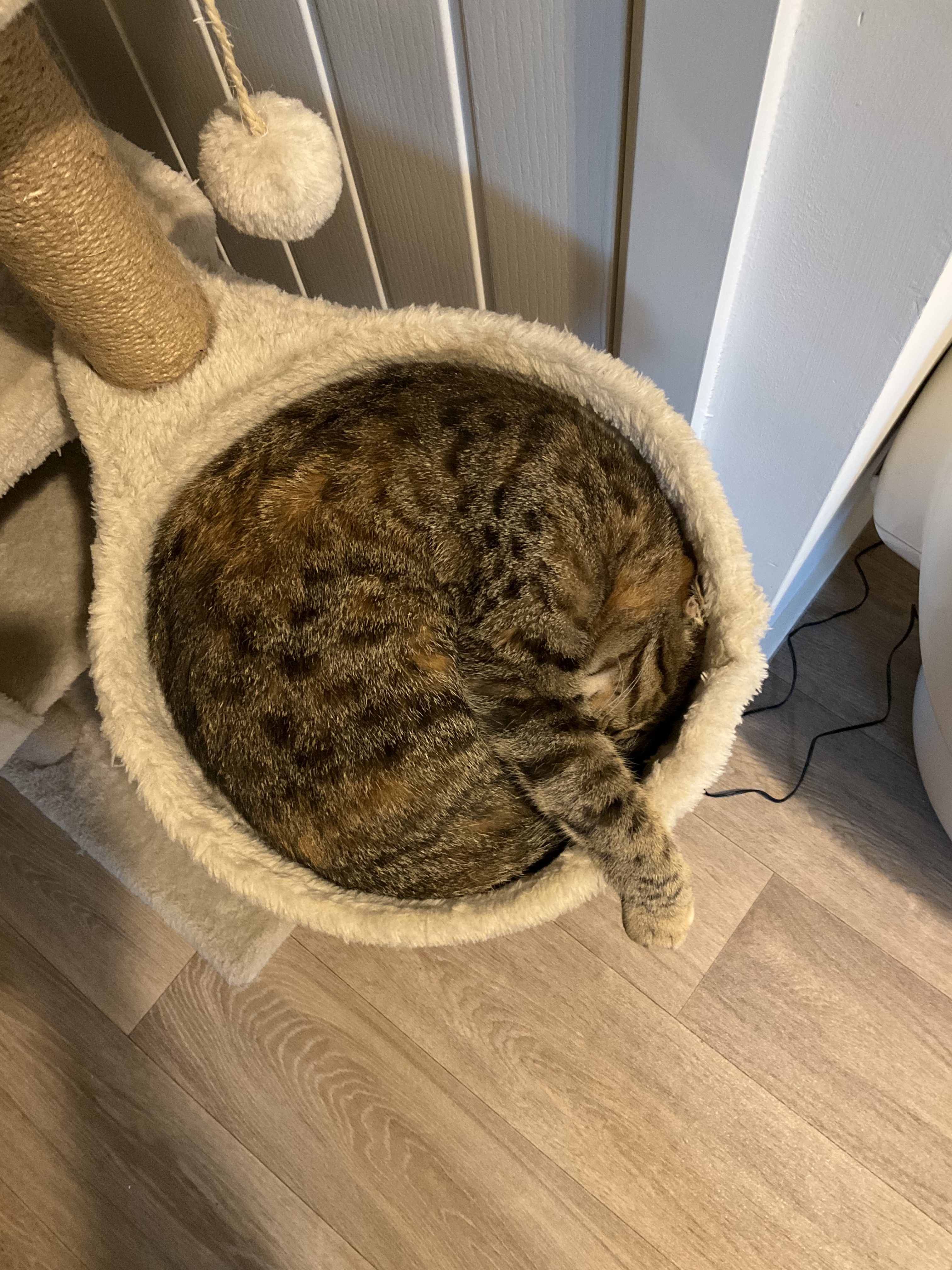
Penelope (left) and Wilbur (right)

In years gone by, I have also been a sucker for sustainable gimmicks. The Eco Egg laundry, uh, thing? Yep, I was an early adopter. And you know where it got me? Eventually my clothes began to take on a faint smell of damp. Even though everything was properly washed and aired. Bar cleansers were another obsession of mine, along with solid shampoos and conditioners. Though I must admit these were far more successful. As they are sensible alternatives to hygiene products that come in bulky or complex plastic containers.

I have to tell you though, one of my all-time favourite shampoo and conditioner bars are by the brand Ethique. And when they’re on sale in Holland & Barrett, I’m like a dog in heat. They are lovely, work well, and I adore their subtle scents. Side note – do Holland & Barrett still do the penny sale? (Oh dear, here I go again…)

But as I go into 2025, my goal is to simply use things up before buying more. Stop the accumulating, the hoarding of things ‘just in case’. And swap products out, where I can, for more environmentally conscious alternatives. Ones that work and aren’t just useless crap or convincing greenwashing.

One way of doing this is to create a ‘want’ list in my journal of the things I’d like to try. If I still think it’s a good idea in a month’s time, after plenty of research, then I’ll buy it. If not, well, it wasn’t meant to be.

For my birthday, Rob bought me an Aarke carbonator. A fancy looking alternative to the Sodastream he found on QVC of all places. I am in love – and no longer buying sparkly water or fizzy pop.

Me sipping my guilty pleasure – Diet Coke.

But what about the stuff that isn’t as easy to swap out – like household cleaning sprays, laundry detergent, toilet roll, fragrances, candles, moisturisers. Sure, there are loads of alternatives, but I’m not sure there’s a clear consensus on whether they’re actually any good, or better for the planet. Well, allow me to be your lab rat. That’s also what I’m going to be trying this year. I’m on the hunt for environmentally friendly, sustainable alternatives to the plastic crap I’ve been buying at the speed of light. And hopefully, I’ll be saving a bit of money along the way. I’ve recently been to my local refill store ‘Siop Sero’ in Roath, Cardiff. And will be sharing how I got along shortly.

Trip to London

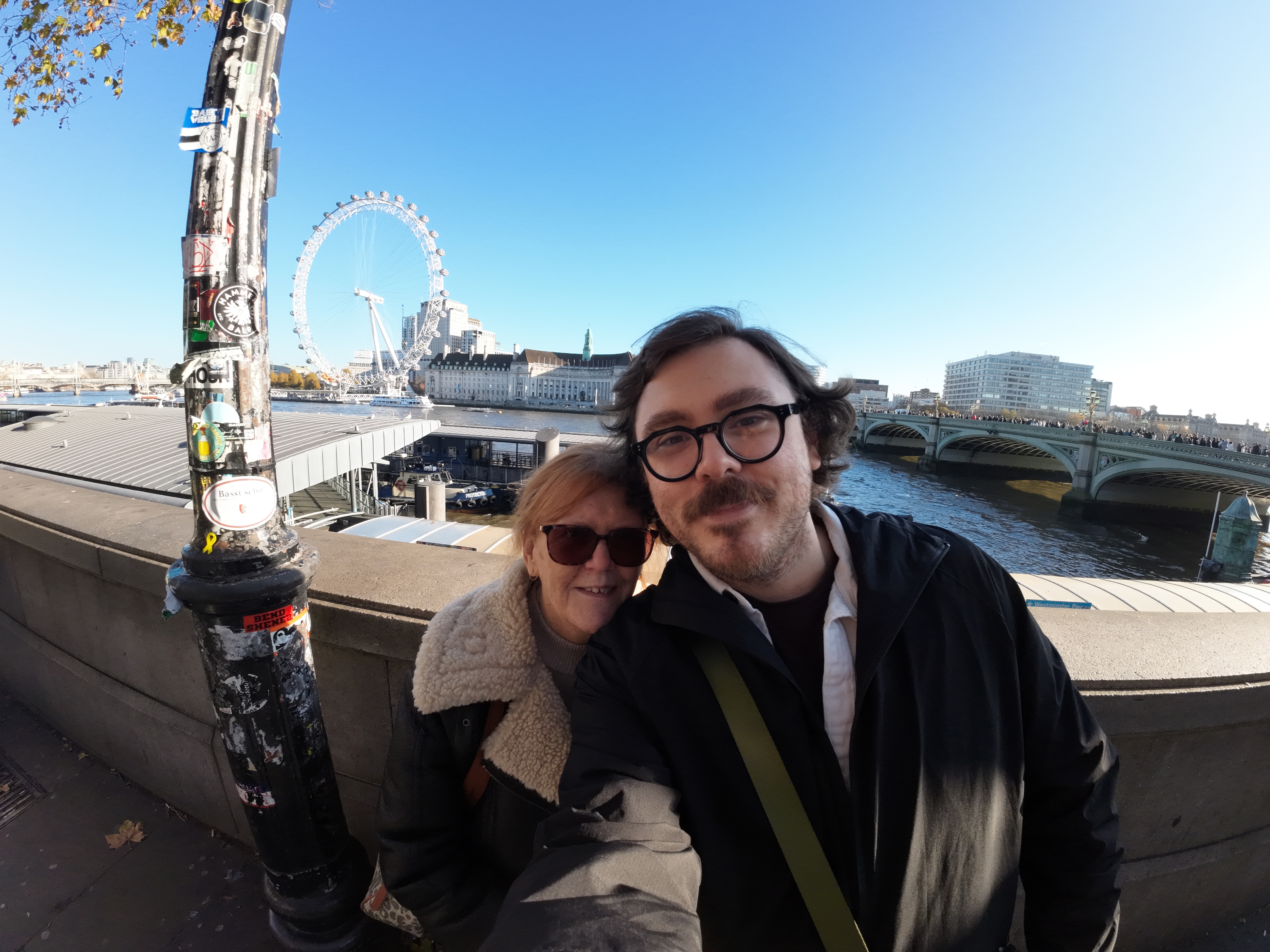
Me and Mum at Westminster, with the London Eye in view across the river behind us.

I will say, I’ve always enjoyed a little trip to London. I used to think the only exception was during periods in which my anxiety was at its most nightmarish. However, I’ve recently come a long way in my thinking about this – because to be honest, going anywhere is nightmarish when you’re feeling a bit rough and raw to the world’s busyness. I’m no longer convinced London is any different.

The number one highlight for me might seem like a boring one – but it’s always the tube. I can’t help but love every second of it. Even when it’s busy. I love the different designs of the stations, a clue as to what era they were built as you travel round. And the Elizabeth Line made getting from Heathrow Central Coach Station an absolute breeze.

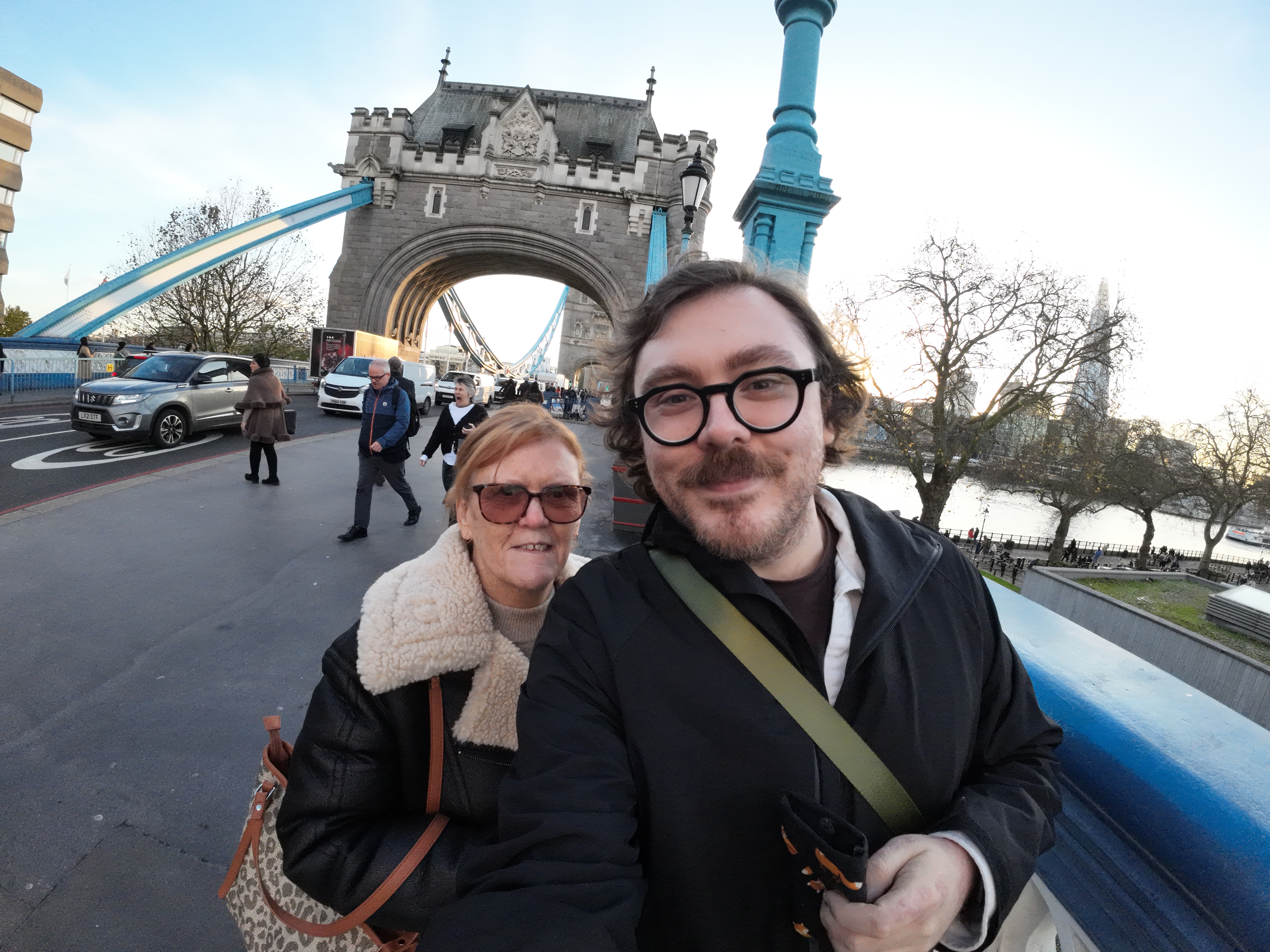
Me and Mum at Tower Bridge

Mum had only really properly been to London as a little girl. Her Mum and Dad packed her and her brothers into the car and drove them down overnight – after a long day of work. They got in all the tourist hotspots, got back into the car the following evening and off they went back to Bangor. So, off we went to try and get as many of the same spots as possible. More than 50 years later.

I’ve never seen my poor Fitbit as overrun as it was last week. It quite literally couldn’t keep up with my 64-year-old Mum. She’s a retail manager, spending all day on her feet. So she regularly already beats my daily step count no matter how hard I try! Seriously, 10 miles a day is nothing to her.

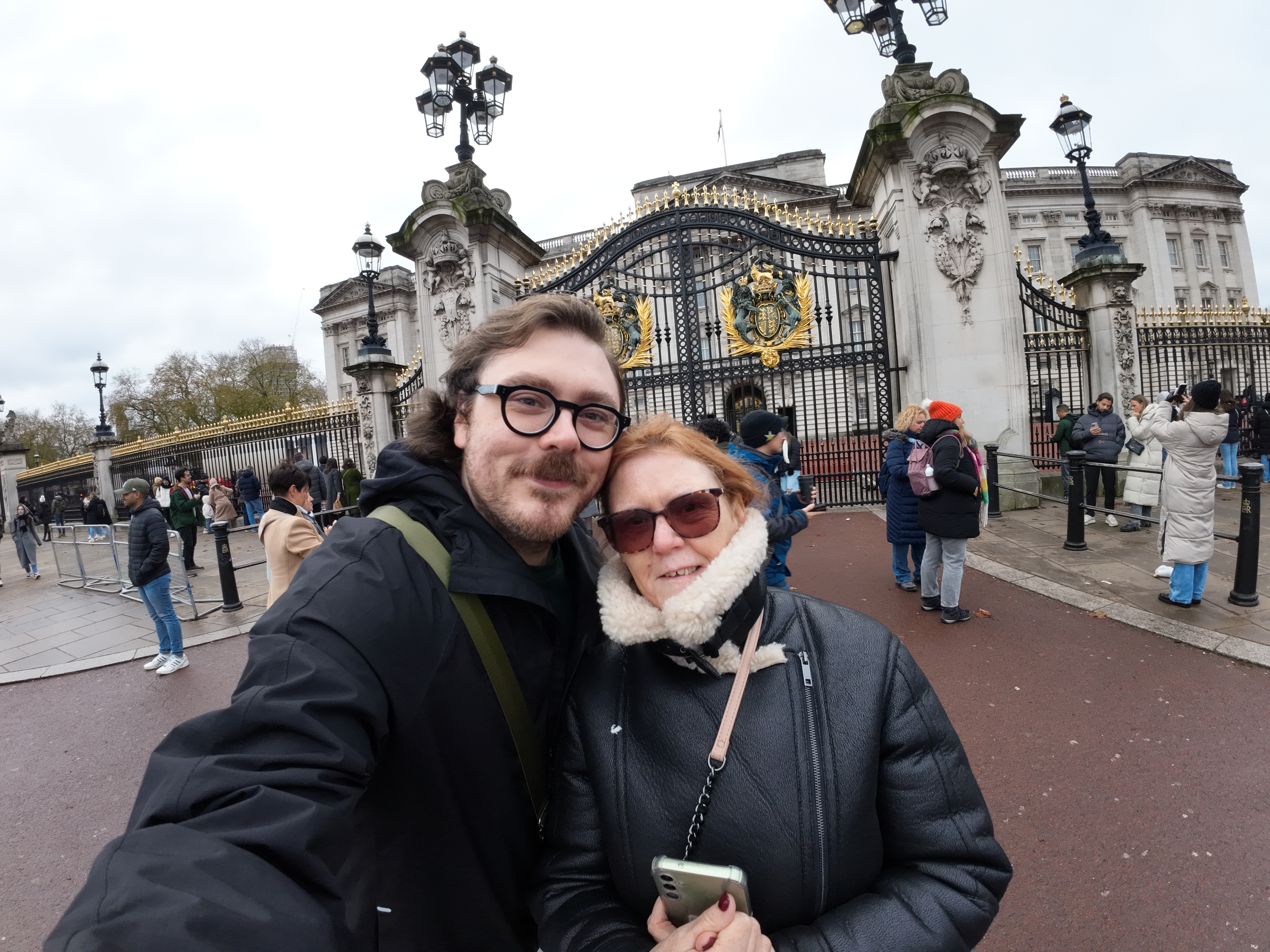
Mum and I standing outside the gates to Buckingham Palace

We hit all the tourist stops. Buckingham Palace, of course. We even got in the Tower of London, Tower Bridge, and the Thames Clipper to Greenwich. Though, despite one of the reasons for our trip being to get our christmas shopping done early, most of the things we’d bought we were so excited to give to each other or Rob, that they didn’t make it under the tree. But there we are.

On a side note, we both had the same thing to say about how much bigger Buckinham Palace seems on TV (and in memory). And don’t get me started on Harrods. If you’re looking for a stress free luxury browse, Harvey Nicholls is a much more bearable time. We walked from Buckingham Palace, through Knightsbridge, taking in all the obscene wealth and luxury consumerism (and cosmetic clinics), on the hunt for a Harrods bauble. We left the very crammed department store with some coffee for my Dad, and vegan hot chocolate for Rob, no bauble. We quickly made our way as far as we could get before going for lunch.

I also introduced my Mum to Leon (the fast-food chain, not a person). I know there is absolutely nothing special about the place, but anywhere that serves coffees and lentil dahl rice boxes alongside turkey and stuffing wraps clearly deserves to be in every town across the nation. Make it happen please; Cardiff needs a Leon. I need those waffle fries as often as possible. Though, while you’re listening Mr Leon, where are those vegan nuggets? Bring them back ASAP!

One of my favourite stops was the Tate Modern. I’ve been twice now in about a month – but that’s because it’s one of the best free things you can do in London. Even ticketed exhibitions are quite reasonable. Especially for the expansiveness of what you get for your money. On a relaxed day, there’s nothing more fun than trotting around at your own leisure, taking everything in. It must surely also have the best gift shop in the UK?

We took our first day quite easy, as it was already unplanned. We were supposed to be travelling down from Cardiff the following day but the flooding on the line from North to South Wales was so bad that train services weren’t running – and we had no idea when they would be. However, getting from North Wales to London is actually quicker anyway, so some last-minute rejigging of Mum’s ticket was carried over the phone on Sunday night, and off we were the following morning.

There was a lot of coffee stops – and many slices of cake. Though horrifyingly, just a week later, the only one that still sticks in my mind was the chocolate fudge cake from John Lewis. Seriously? All that way for John Lewis cake? We also made an error that should be unheard of on any Christmas trip… not a single mince pie was consumed.

I’ve curated all of my favourite little moments from the trip below.

October Reading

October Reading Update

I’m currently enjoying the first fruits of autumn – meaning I’m sitting with the cat curled up next to me. The heating has finally been switched on after a LONG summer hiatus. Everything is spiced, the coffees, the candles, the cakes. You don’t get this in the summer. It makes for very cosy reading.

I have always loved Graham Norton’s books. Since his first novel, he’s managed to navigate small town drama juxtaposed with the call of the big city beautifully. Growing more ambitious each time, without losing the heart – and the humour – that makes him such a fabulous writer.

His latest, Frankie, turns everything on its head, though. It is so much larger in scale and honestly, so much more ambitious. Frankie is an epic tale of an entire life, start to finish. Well, the best bits at least. Every moment of heartache is carefully laced with enough levity to keep the story flowing without any awkward jilts. This is not a celebrity novel in any way, shape, or form.

If the slowly unfolding tale of a orphaned little girl in small town Ireland, crossing the Atlantic only to find herself still stuck in a perpetual chain of life changing events isn’t enough to get you to pick this one up… I don’t know what will. It combines some of my favourite things in a novel; inter-generational friendship, the pains love (found, lost, and unrequited), and depictions of mammoth wealth. Who doesn’t love a tail of rags to riches?

I would probably struggle to explain what it is that makes this novel work so well, if a friend of mine hadn’t put it so perfectly. Norton doesn’t get bogged down with boring details. He just keeps the story moving. And that’s what makes him stand out – there’s not a spare word, not a page of filler. One of my favourite moments in the book is a nod to this very idea. Where Frankie and Nor (our protagonist’s life-long best friend) explain to Damian, the agency carer she’s been recounting the highlights of her life to, that the period between the excitement of New York and the present day she hasn’t touched upon, ultimately don’t matter.

The overwhelming longing that comes with knowing when your best years took place, can’t be avoided. Maybe one day, we will all look back at the life we’ve lived, and wish just for a moment we could revisit that feeling of being so alive.

Speaking of the pains of wealth, reading about how the other half live isn’t just fabulous (and very troubling) in novels. Just like Frankie, Gary Stevenson’s The Trading Game also charts the rise of an underdog. As well also very nearly – but not quite – becoming a globe trotting adventure. But more on that later.

Stevenson has a fantastic ability to explain complex economic theory to his audience of online followers (those subscribed to the Gary’s Economics YouTube channel). But, it’s during his tales of how he fell into the mysterious world of trading, that I began to understand how he is able to do so, with so much clarity, for those without an economics background. When an older trader he looks up to tells him to throw away his old university textbooks, and start to pay attention, it becomes very clear that this isn’t really the world his academic tutors were preparing him for at all. They were preparing him for their own.

Like any good story, this book charts the rise and fall of an underdog you can’t help but root for. Gary’s constant reminder of home, through his childhood best friends equally chaotic journey into the world of banking, serves as a grounding for this story. Look how easily you can fall into the wrong habit, the wrong crowd, even the wrong career. And look how difficult it is to leave it all behind.

I think what I found the most jarring about this book, and what other readers will too, is how humanising it is of the people who made a killing off the back of the 2007-2008 global financial crisis. There are humans, not just a huge instutition, making decisions that affect our lives. Making themselves rich off the back of our struggle. But there’s a worthwhile lesson here about how global institutions not only normalise this distancing between your actions in work and the wider societal rot that that large corporations are inflicting on society. And how the well-being of their employees, their freedom to move on, to find meaningful work elsewhere, to restart their lives away from the constant grind of trading, inevitably falls to the wayside when there is still profit to be made. Meanwhile, the rest of us find ourselves working more and more, for less and less in return.

My main takeaway, without spoiling anything, is really how validating it feels to have someone explain verbatim how the anxiety we all feel about money and how far it goes, is the product of the terminal decline global economies are now experiencing. And how it’s allowed to continue, despite the destruction it causes to people’s quality of life, their happiness, and the planet. Gary’s story is a testament to that, in fact. What it takes to win in a fight with one of the world’s largest banks, is the kind of nerve we could only dream our politicians had.

Perhaps not the biggest jump from the world of banking – let’s talk about crime. Ann Cleeve’s Vera novels have long been some of my absolute favourites of the genre, and the latest (The Dark Wives) was absolutely no exception. Something I think crime fiction often isn’t given enough credit for, is the care authors in the genre take to accurately depict the landscape they cover. This might be understandably masked by the neverending stream of murders they force on the poor locals. But that doesn’t mean it should be overlooked. Vera Stanhope – the character I will passionately argue is the 21st century’s most iconic detective – traverses the Northumbria area in her equally iconic Land Rover, moving between the metropolitan Newcastle and the Northumberland countryside. In The Dark Wives Cleeve’s tackles the heartbreaking state of children’s homes – in a post privatisation world. Where Council’s are struggling, and every child is a cash cow to their wealthy CEOs.

Veganuary 2024: Enjoy the junk, but remember there’s more to life than chocolate and jackfruit.

One of my favourite times of year, January. When restaurants and shops alike are desperate for us to pop in and spend the few pennies rattling at the bottom of our purses. If you have anything left to spend, it’s one of the best times to do it. In recent years, Veganuary’s star has been on the rise, and with it, an explosion in new menu items… and some pretty unusual criticisms.

Back when I first gave up meat and dairy, the idea of veganism seemed to evoke a burlap wearing yogi, with an intentional focus on health – an obsession even. And you’d be forgiven for thinking that way. Products aimed at vegans to replace some of their mainstream counterparts (soya milk, mock meats, even dairy free yoghurts and cheeses) weren’t necessarily fortified with the nutrients vegans needed. Supplements were essential (and for many, still are). 

But as the years rolled on and McDonald’s turned the veggie burger into something indistinguishable from the real thing, and Cadbury brought milk chocolate (or is that m*lk?) back into our lives, more and more outlets, and certainly more people who frequent the comment section, seemed determined that these foods had become the main staple of a vegan’s diet. I ask myself if Cadbury’s Dairy Milk is the staple of all meat and dairy consumers – surely not. Or if the average British child gets all of their calories from Happy Meals. A new stigma has arrived. Vegan’s eat junk now. In fact, it’s all they eat.

Don’t get me wrong, the day Galaxy introduced their Vegan Cookie Crumble bar, I did have to give myself a stern talking to that this could very quickly get out of hand. But it never made me want to stop eating vegetables! Nor did it stop me from eating nuts, legumes, and the new generation of mock meats that have a better balance of lean protein and nutrients like B12. I’m never going to give up pasta, or roast dinners. Why would I? There’s so much to choose from now, why on earth would anyone, let alone a vegan limit themselves to only eating junk?

I think this lack of imagination when it comes to what the average person thinks of as the average vegan diet stems from something much simpler than we give it credit for. I don’t think there’s even necessarily a wilful attempt to brush away guilt (oh, I could never give up my health for a life of anaemia and brittle bones), but rather plain and simple overthinking. After all, whole grains, fruits, vegetables, legumes, these are the staples we all eat already. Regardless of whether we eat animal products. They are the base of most of our meals. 

Increasingly I see both vegans and meat eaters alike, obsess over which diet is more natural. An age-old logical fallacy, the appeal to nature. And I think so much of it comes from our very black and white view of processed food. Something loads of us eat loads of. And something newspapers and television love to make us feel bad about. And for good reason too, sometimes. But when the vegan diet is so unavoidably filled with fibre (something most Brits need a serious boost of), how much harm is processed food really doing us?

Well, that comes down to what you perceive as processed. ‘Natural’ is not always best. Especially when you’re in need of B12 to keep your body functioning the way it’s supposed to. I’m picking on B12 so much because it’s really, in my opinion, the biggest concern for vegans. Reality is, plenty of meat eaters experience B12 deficiency too. The reasons behind it are complex, both genetic and economic, as well as simply taste and preference.

It’s not hard to meet the rest of your needs through food though, but B12 previously always required a bit more effort if you’re not consuming animal products. But unless you’ve been living under a rock, you might have noticed fortification is becoming more common place. So much so, it’s not hard to imagine that supplementing essential nutrients for vegans might soon be a thing of the past. Everything from supermarket own brand plant milks are being boosted with calcium, B12 and even vitamin D. Dairy-free yoghurts and cheeses, to meatless ‘chicken’ fillets, the foods we’re eating for convenience, they’re all becoming sources of exactly what we need. 

Baked beans are another fascinating example of why not all things are processed equally. Beans are a great source of fibre, protein, and other essential nutrients. Just because they’re in a can with a label, doesn’t mean we need to fear them. Foods should be looked at in the context of the role they play in our whole diet. Nothing will give us everything we need, alone. No packet of Quorn, no carton of Alpro, and no man! 

This Veganuary, focus on the big picture. Swap your essentials (milk, protein, snacks) with an alternative you like. And this might mean trying some you don’t end up loving. Amp up everything else you already know you love: your favourite fruits and veggies, grains and legumes. Make peace with the fact nothing will give you the perfect identical experience to what you’ve given up, but it might bring you just enough flavour, texture, and pleasure, to make life on the other side seem a bit more doable than you thought it would be. 

New for 2024, when skincare becomes medical, how to furnish a home…

Release the wiggle

I used to be firmly in the camp that said, with absolute certainty, that new year’s resolutions are destined to fail, and rather snootily, destined to be made by people with zero will-power. But I write to you with my sincerest apologies. For it seems I might have been both wrong and a bit miserable.

Over the last few years, I’ve made some relatively big changes. All within the general theme of taking better care of myself. For me, most of 2020 was an absolute write off. While many people used the lockdowns to try to form new relationships with their bodies by exercising, learning new skills, and maximising all the time spent at home, I simply lost my mind.

In truth, I’d probably been losing my mind – descending into quite a nasty period of depression – for a few years. Sorry, hang in there, this isn’t all doom and gloom. But as we emerged into the brave new world of restaurants with tables 2 meters apart and washing our hands (did we wash our hands prior to 2020?), I decided it was about time I lightened up. And the first step in finding a better outlook on life? Getting some fucking exercise!

For me, it was all about walking. By the end of 2020, once I’d gotten over the fear of actually leaving the flat, and we were allowed to travel freely again, I worked my way up from a quick walk around the block, to regular 12, even 15-mile walks. But good things can’t last forever… mostly because the government’s furlough scheme was coming to an end and I needed to find a new job. And I couldn’t face the prospect of going back to a job with the very unsociable hours that had contributed to my unhappiness. So, by April 2021, when I eventually found my dream job (working from home), my routine was strong. Wake up early, start work around 7am, and finish at 3pm. Go for a walk, grab a coffee, enjoy the fresh air before it gets dark.

When January 2022 came around, I knew I was ready for more. I’d been dabbling with the gym for a few months at this point, so while it wasn’t necessarily brand new to me, I hadn’t actually made it a real part of my daily routine. I made the daring decision (drunk on all those exercise endorphins) to commit to going to the gym at least 3-times a week. I prepared myself to hate it, but to turn up anyway.

Well, I didn’t hate it. And surprise, surprise, getting 45 minutes to an hour of regular exercise every day does wonders for your mood. Who’d have thought that everybody was right about this? My own Mother was so smug, I couldn’t look at her.

For the last 2 years, exercise has become such an essential part of my daily life. It’s been the key to changing my entire outlook on everything. There is a remarkably simple truth to seeing how I feel about something after I’ve gotten some exercise. Nothing seems quite as daunting, or quite as impossible, once you’ve sweat a bit on the elliptical.  Setting that goal for myself at the beginning of 2022, to go and do something that brings so much joy (I am addicted to the feel-good chemicals buzzing uncontrollably in my brain), has brought pleasure back into every aspect of my life. So, if you’re thinking about setting a new year’s resolution (don’t worry, it’s not too late), or if you’ve already set one, let me be the first to wish you luck on your journey. And congratulate you for making the fabulous decision to take care of yourself.

Skincare and skinCARE

Listen, I bang on about the virtues of SPF to anyone who will listen. And it all harks back to my first time using The Body Shop’s Seaweed Cleanser and Seaweed Daily Moisturiser with SPF in uni. That feeling of every day luxury, in taking care of yourself, and basking in that shiny post-cream glow (steady on!) – it makes me so happy to be alive!

As a child, I was afflicted with the most heinous dry skin. So riddled with eczema was I, that I was, on more than one occasion, sent home from school due to the pain caused by my cracked and bleeding skin. Luckily for me, steroid creams got it under control, and by some greater miracle, I seemed to grow out of it. Or so I thought, until last week.

As a lifelong lover of the Winter months, I have something really quite embarrassing to admit. I now hate the cold, and I’m so sorry for getting this all so wrong. Summer is actually quite lovely. The miserable short days of winter are a disgrace. Over the course of about 3 weeks, a small patch of dry skin near my eye, led to patches of dry skin all over my face, and eventually my eyes being so swollen it looked like I was in the throes of an allergic reaction.

A quick video call with my GP and there I was, face-to-face with the old frenemy I hadn’t heard from in nearly 20 years. Eczema. At least that’s what the lovely doctor on the other end of the facetime call suspected. As it was on my face, he recommended I avoid cleansing for a week, and moisturise 3 times a day, applying a very mild (available over the counter) topical steroid. He also added I should take an antihistamine to help with the itching.

3 days later, not a trace of the dry, scaly, tell-tale signs of eczema were left. Praise be. But this also meant not being able to use my prescription retinoid (prescription for pure vanity, I might add). But all of my obsessive reading, watching, listening, and shopping had meant I was very well-stocked for a situation involving skin sensitivity. Real thanks to Aveeno for making some of the best, most gentle products on earth. AND for FINALLY releasing a daily moisturiser with SPF! AND IT’S BLOODY TINTED!

I’m the tacky one?

I want to leave you with a cautionary tale.

I hyper-fixate on many things: skincare, food, books, coffee shops, public transport. Having interests and hobbies is fantastic for a person’s overall sense of wellbeing, connectedness to community, and creativity. But what I’ve never had even the slightest interest in, is home décor.

I’ve always liked to think of myself as an enjoyer of the finer things in life. Scented candles, framed photographs, pretty mugs, you get the picture. A trip to Homesense lights a fire in me that is so frightening, it rivals the city of London on the 2nd of September 1666. But what I’d never developed was an aesthetic more complex than a colour palette of mustard and teal. If it’s mustard or teal, it’s fine by me. Stick it in the basket and I’ll find room for it once I get home.

What you can’t do when you’ve just bought your first home and need to furnish it, is just stick it in the basket and find room for it when you’re home. No matter how hard I tried. Rob, my parents, friends, all seemed united in informing me the one piece of information I’d always missed: that I am completely, and utterly, tasteless.

taking photos

Me, Tim, in Tim Hortons, drinking an iced oat latte. [Iflord XP2 35mm – shot on a Canon Sure Shot Z155]

I’ve wanted to have a chat about taking photos for a while now. But, as a total amateur, I’ve always been a bit reluctant to put my total ignorance and inexperience out there. Lately, however, I’m feeling a bit differently about this. Rather than looking to improve, I’m actually quite enjoying being an amateur.  

When it comes to photography, the world is huge. And expensive. This jump in prices is in sharp contrast to when I ordered my Canon EOS 500N on eBay, during the first COVID-19 lockdown. I paid £20 for a camera I absolutely adore. Sufficiently analogue but with plenty of late 90s digital innovations that helped make my journey into 35mm as simple as possible.

Rob, dancing to Heart 00s on the radio [Iflord XP2 35mm – shot on a Canon Sure Shot Z155]

Now though, when you’re scrolling through eBay, you’re more likely to find people reselling equipment and even film at extortionate prices. Last week, I saw an expired roll of Kodak Gold (from 1999) going for £30. And if you’ve not used a roll since the early 2000s, let me tell you, it is as insane as it seems. Just a year ago, I was paying £4-6 for a roll of Kodak ColorPlus – my absolute favourite when it comes to affordable film. Now, I’d be lucky to find one in stock anywhere. Scalpers are making a killing on the resale market. For less than £30, I used to be able to buy a bundle of 5 or 6 rolls.

And it’s not all Brexit and inflation either. As the demand for and interest in print photography increases, film manufacturers such as Kodak have openly been struggling to keep up with the demand. Even as they publicly call for Rochester locals to apply for their film manufacturing division, in an attempt to ramp up production. Fujifilm struggling so much that they’ve actually just been buying film from Kodak and rebranding it. Leading to many unhappy about their faves (such as Superia X-tra 400) seemingly disappearing from the market.

Me and Rob at a friend’s birthday party [Iflord XP2 35mm – shot on a Canon Sure Shot Z155]

Though we don’t know how permanent this madness is, it’s likely that as demand increases, manufacturing will eventually get better. Leading to less stock issues – and hopefully more reasonable prices. But, if like me, you’re not willing to go broke buying out of date film on eBay, what are you to do?

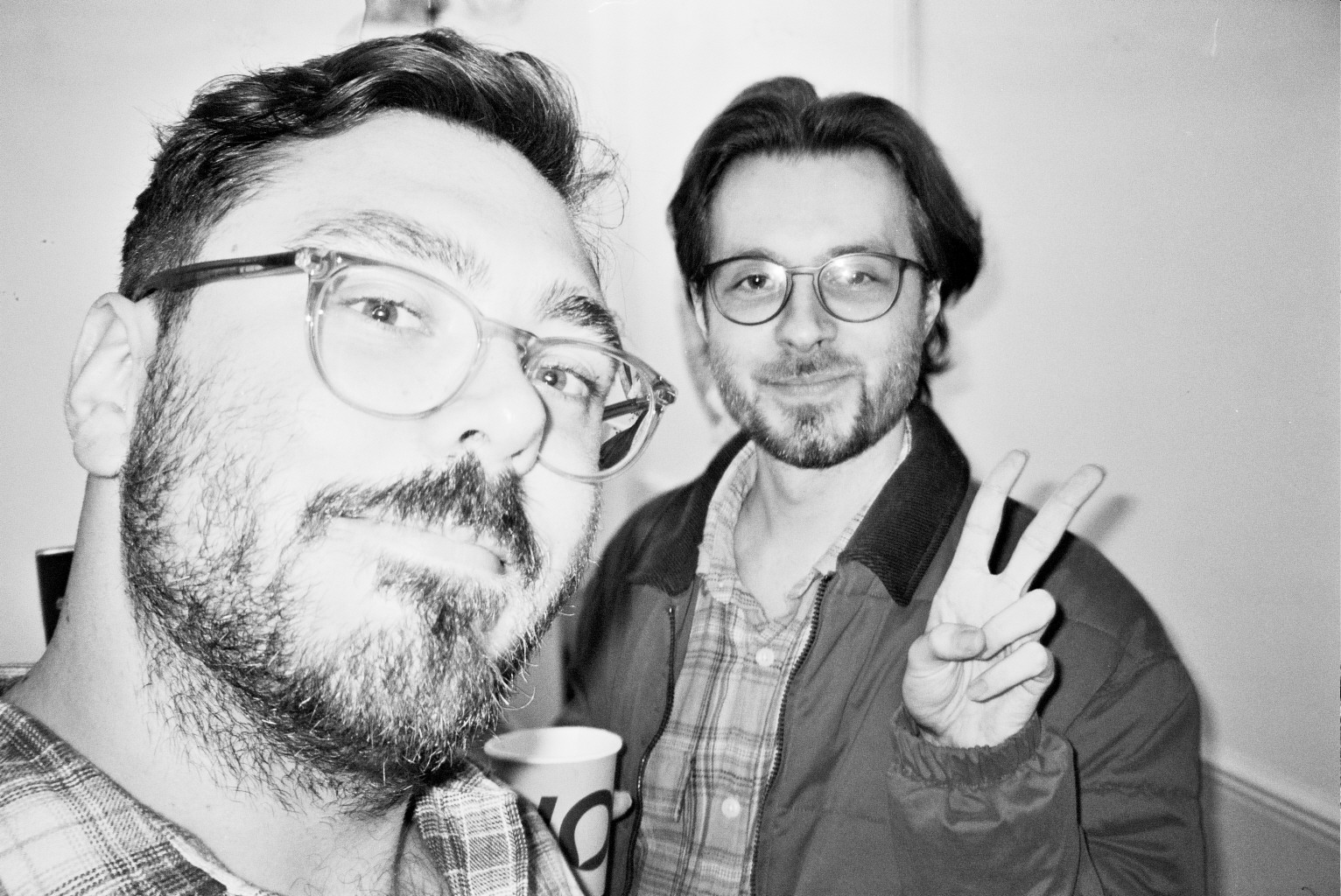
Me with Ashleigh & Sim, taken with a self-timer on Sim’s staircase [Iflord XP2 35mm – shot on a Canon Sure Shot Z155]

Well, my go-to in the face of this madness has been to turn to possibly the most convenient black and white film still being manufactured. Ilford’s XP2 has become such a staple for me, not just because I’m able to rely on it being in stock, but because of its price and ease of processing. I know plenty of newbies who, like me, are nervous of how they’re going to get a roll of black and white developed. Especially when their local lab might be a Max Spielman in the back of a giant ASDA supermarket. Or a smaller local lab that charges extra for the hassle of hand processing B&W film. 

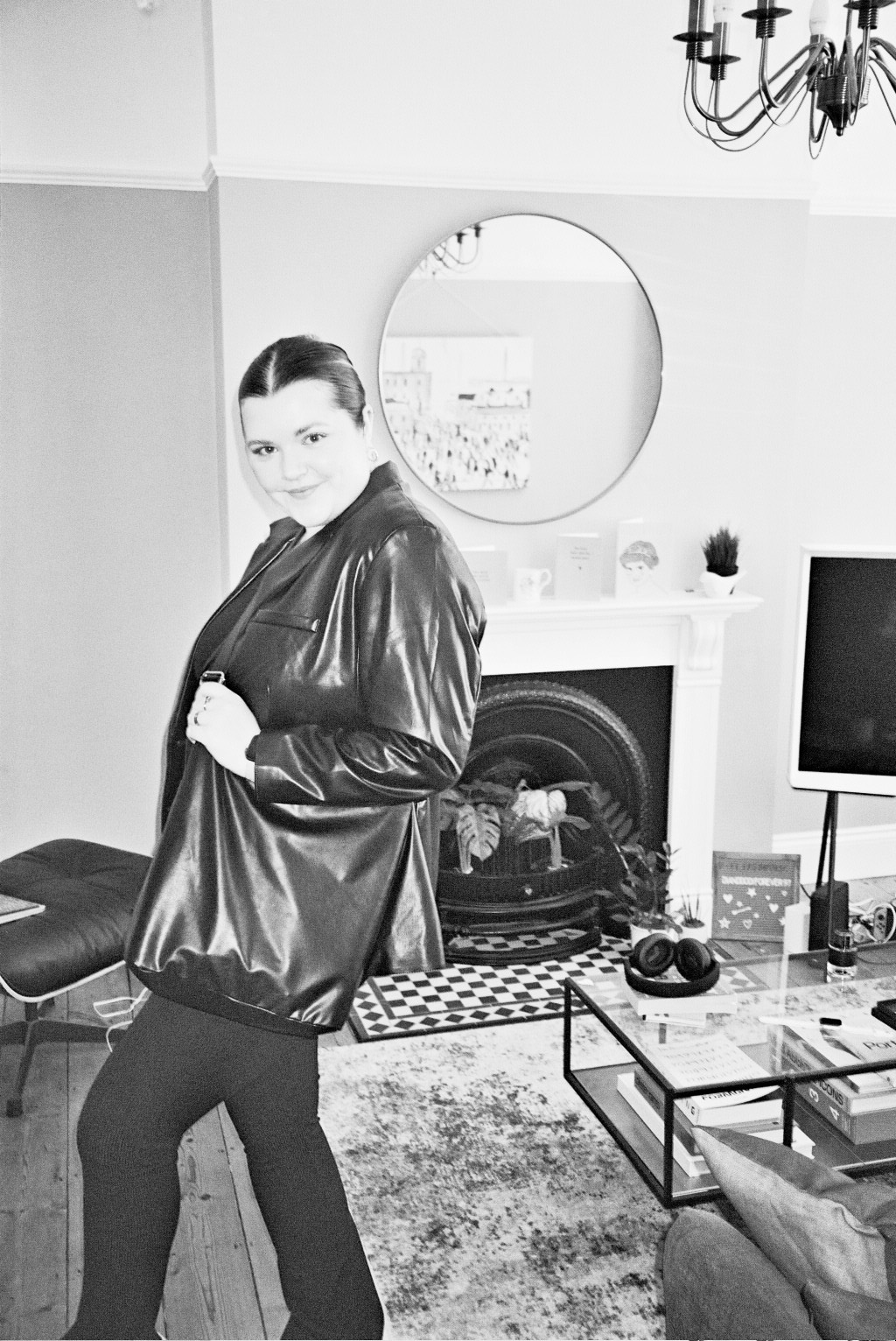
Ashleigh, looking the most fabulous I’ve ever seen anyone look in pleather. Diva. [Iflord XP2 35mm – shot on a Canon Sure Shot Z155]

Ilford (to my knowledge) produce the world’s only remaining chromogenic Black & White film. Meaning XP2 can be processed using the standard C-41 colour chemical process, meaning your local lab should have no problem delivering a speedy turnaround. And if you’re dying to pick up your prints as soon as possible, like me, this is a godsend. 

Shooting in black and white is an entirely different experience to shooting in colour. But that doesn’t mean it’s any more complicated. While I certainly consider the composition of photos a bit more when I’m out on a walk, I am every bit as carefree with my point and shoot if I’m visiting a friend, or out for a coffee with Rob (my partner). In early 2021, I ordered a Canon Sure Shot Z155 and it’s been such a delight capturing so many gorgeous memories without the bulk of an SLR. All of the images in this post are taken on it, using Iflord XP2 35mm.

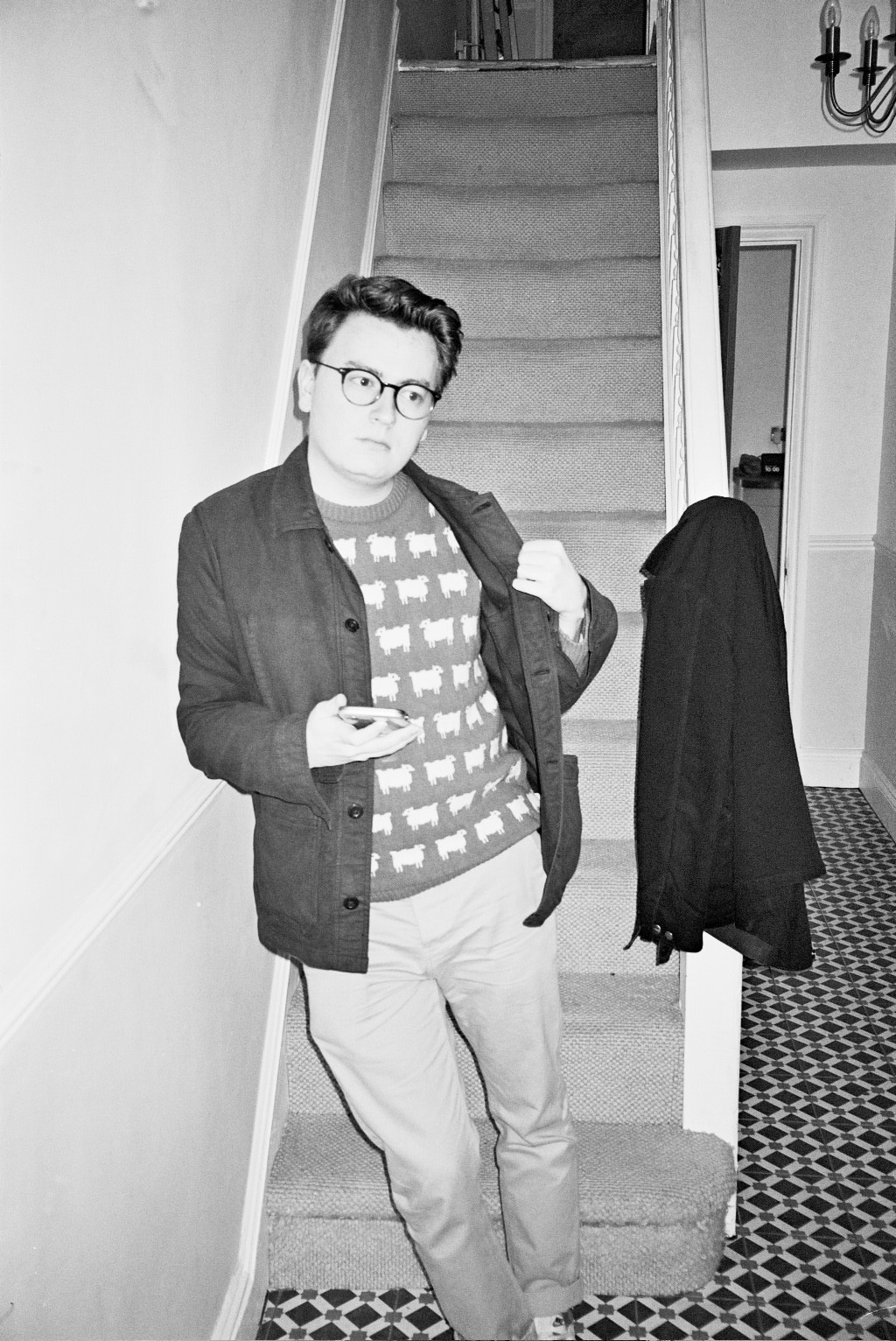
Sim showing off the green version of Prinny Di’s stunning famous jumper [Iflord XP2 35mm – shot on a Canon Sure Shot Z155]

To those unsure where to begin, XP2 goes for as little as £7 on Analogue Wonderland. They also manufacture their products in Cheshire and so getting hold of them has proven to be no issue. Even while Kodak stock has become increasingly scarce. Some of my favourite photos I’ve ever taken were using this film. My post about my birthday trip to Bangor (taken with the EOS 500N) is just one example of what this stock is capable of. 

Rob, scoffing chips before everyone arrives. [Iflord XP2 35mm – shot on a Canon Sure Shot Z155]

When it comes to taking photos, I’m sentimental. I don’t really have an eye for the aesthetic, either. Even if I do love spending hours looking through other people’s beautiful compositions. It’s just not how my brain works. When I’m snapping, it’s usually just something I want to remember forever. And that’s a perfectly valid reason for using film. The experience of dropping a few rolls off (I like to wait until I have at least 3), and getting physical prints, is one of my favourite things to do. 

She’s got the X-Factor (an’ everyfin’) [Iflord XP2 35mm – shot on a Canon Sure Shot Z155]

I love the feeling of opening those little glossy envelopes. I love the lustre of matte photo paper. And I love looking through them, every photo a surprise and a pleasure. For me, it’s almost a ritual. Nothing beats framing my favourites or popping them in a card to send to a friend. When you’re shooting on film, there’s one shot at it, and it’s captured forever. You don’t have to worry about getting it right just because someone else likes to spend hours getting the perfect shot. If you just point and shoot, you’ll still have something to look back on. Good or bad, it’ll mean just as much to you. 

Two Divas at Brodie’s Coffee Hut [Iflord XP2 35mm – shot on a Canon Sure Shot Z155]

One step too many

When it comes to getting the most out of our skincare routines, we’re often bombarded with all of the supposedly powerful anti-ageing, anti-dark spot, anti-blemish properties of whatever is ingredient flavour of the month. But as we’re increasingly saturated with serums, are we starting to miss the point?

Plenty of popular ingredients added to skincare products serve us well. Niacinimide, for example, is great for those dealing with excess sebum production and acne. This antioxidant helps to regulate oiliness and fade post inflammatory hyperpigmentation. But for lots of us, all it does is sting!

Retinol is another fantastic example of a vitamin antioxidant that’s capable of delivering results for those looking to improve complexion. As well as offering some protection from free radicals generated by environmental exposure.

But like most promises made by the beauty industry, they can start to fall apart when we start to question what we’re actually being sold. And looming over us menacingly is the small matter of formula. Products have become increasingly more complex in their formulations, but the time and money spent into research and development by cosmetic brands, is far from straight forward.

When it comes to ingredients like retinol, brands like L’Oreal and Olay have spent millions on developing formulas that don’t degrade as soon as the cap is popped off and air gets in. And we see this with their advancements in the realm of SPF too. The L’Oreal patented Mexoryl generation of filters has meant higher protection, and increasing comsetic elegance in how they wear. However, brands that place more emphasis on capturing the current TikTok obsession can often rely on sub-standard formulations, sometimes being nothing more than white-label products.

White label products are a relatively unknown phenomena in the skincare world. But they’re essentially when a (usually smaller) brand purchases a ready-made product, only for their branding to be slapped on the bottle. What this means in practice is multiple brands selling the exact same product.

Previously, I had always assumed this phenomenon to be relatively well-contained to the budget space. In practice, some of the brands guilty of this type of product-for-product-sake approach, span the budget to higher mid-price-range. And the reason this becomes an issue is because without adequately stabilised formulas, a product can contain as much vitamin C or retinol as you like, but that doesn’t mean it’s getting into your skin. Let alone shelf-stable enough to prevent rapid degradation of the active ingredients as soon as the packaging is opened.

Vitamin C is a notoriously finicky ingredient to formulate. Brands often opt to use derivatives such as Sodium Ascorbyl Phosphate. While these derivatives might be more stable, and therefore more likely to make it to your skin, the research is understandably more limited. So, how well it’s going to perform is even more unknown. Most of the time we don’t even know if there’s enough in the product to even make a difference. It’s with ingredients like this that I often opt to stick to the big brands: L’Oreal, Galderma, Neutogena. They’ve spent the time and money to make sure they’re striking the right balance.

Finally, I think we can often develop a tendency towards playing doctor when it comes to our skin. Brands like The Ordinary have often flicked a switch in me that quickly transforms my dressing gown into a lab coat. But the reality is that I’m no more a chemist than I am an Olympic diver. I can’t remember the last time I stepped foot anywhere near a swimming pool.

While it’s fun to play dress up, it’s important to remember that the basics of skin care, cleansing, moisturising, and protecting ourselves from the sun, are principles that – for most of us – are as essential as they are fool-proof. If you’re using the right gentle cleanser, keeping your skin moisturised, and wearing a good broad-spectrum SPF, it’s almost guaranteed you’re going to see good results. Especially if you’re starting from an absolute zero.

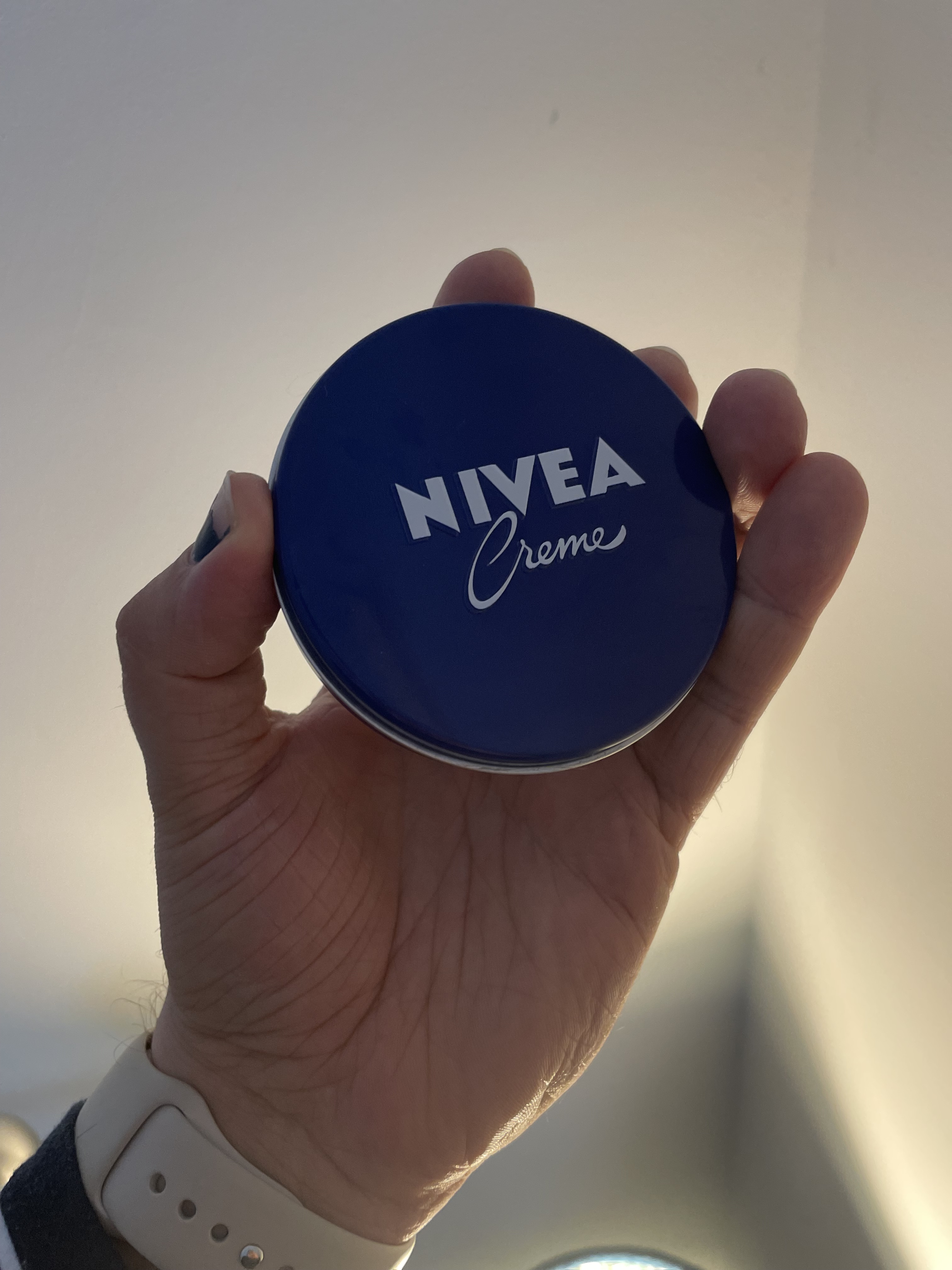
Some of the most useful tools in my skincare routine are the classics that bring that heady mixture of sensorial pleasure and nostalgia. Products like Nivea Crème. A classic that’s always been exactly what I needed to relieve even the driest of skin. A product offering nothing more complex than intense hydration. It’s thick, occlusive texture blended seamlessly with a fragrance that reminds me of being put to bed as a child. Not just by both of my parents, but even my Grandmother.


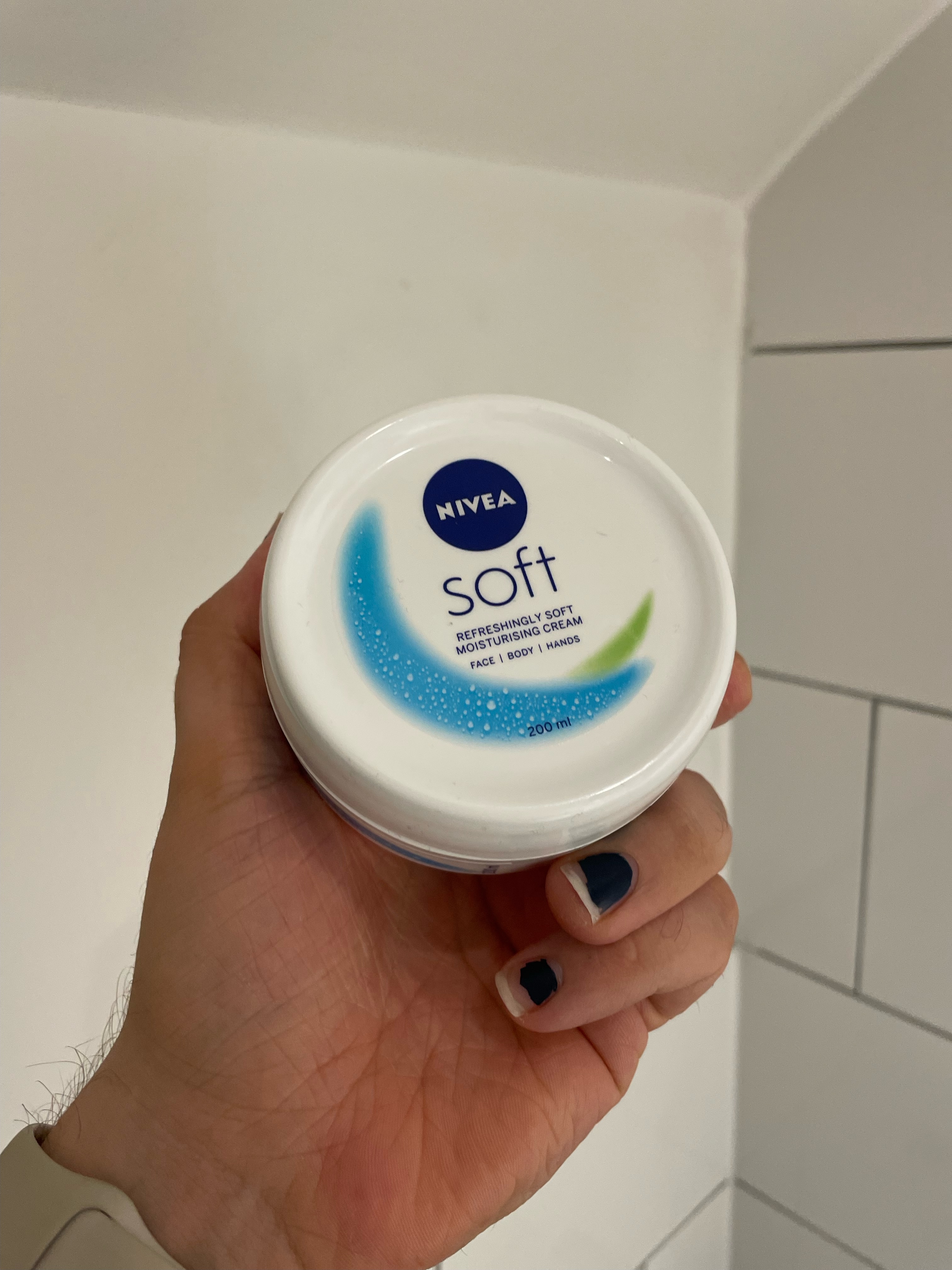
For the summer months, I love Nivea Soft. A lighter sister of the classic Crème, that first introduced me to a skincare ‘routine’ as a teenager. Its light, fresh fragrance, and whipped dimethicone consistency is one of the single greatest pleasures known to (skincare obsessed) man when the weather gets warmer. It reminds me of stuffy nights out in Bangor and early morning bus rides to college. The tube version also makes a fantastic hand cream.

Most of our favourite basics are loaded with great actives. The key is remembering that we don’t need all of them, all the time. And we certainly don’t need them in excessive quantities.