‘tis the season to be eating

December might have only just began, but I must confess, I’m already one box of mince pies into the Christmas spirit. I know, I know, starting early gets a lot of dirty looks and judgemental comments. BUT – I’ve gone all in this year. I even put the tree up on the 28th of November. It’s been such a wild year (THREE prime ministers and energy bills skyrocketing) that I have decided the only thing to soothe the anxiety of 2022 is to lean in, as far as physically possible, into the festivities.

I’ve gotten a lot done this year that I never thought possible. A job I love, finally lost the weight I’ve been trying to shift for years, found a love of – dare I say it – exercise. I’m even learning how to save some money, and being financially responsible has never been one of my strong points. But as the seasons change, and our days become increasingly shorter, twinkly lights and the smell of all-spice and orange rind is the only thing that can save me from gloom.

What I think people underestimate is how much the change affects us as we slip out of never ending daylight during the summer months, into the dark by 4:30 misery of winter. I think it’s why I’m so grateful towns up and down the country are slinging up the decorations earlier and earlier every year. Without them, we’d all be wandering around wondering if we’re just in the middle of history’s longest ever solar eclipse. Weren’t we all just having barbecues?
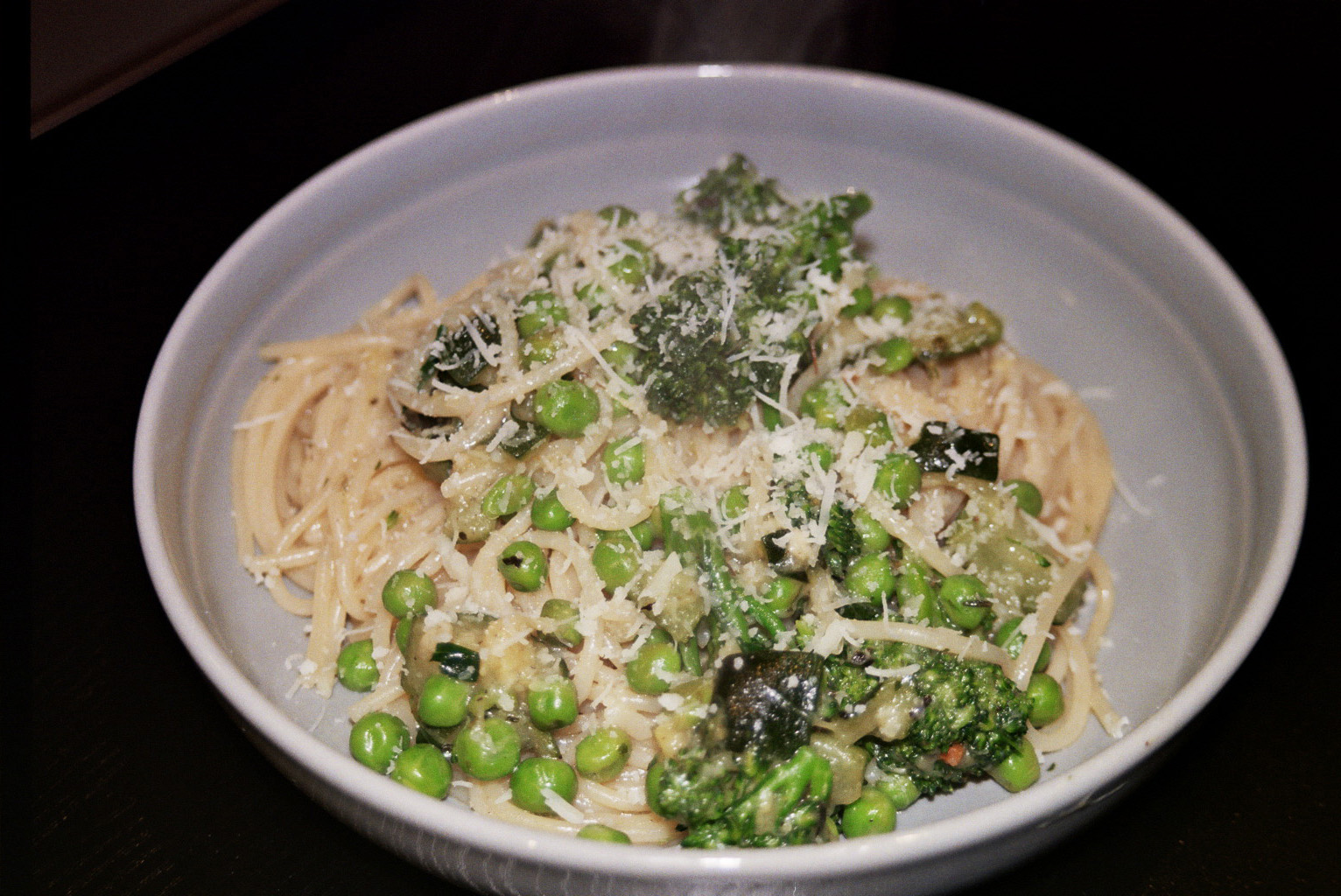
It might be a bit of a controversial take, but other than toast, I am not a fan of a hot breakfast. For me, even in winter, a cold breakfast just seems more gentle. I love porridge, but ever since learning that a pot of coconut yoghurt and some oat milk can make it just as creamy as 3 minutes in the microwave, I’ve no interest in eating it warm. Anyway, for me, winter is all about larger mugs of coffee, toast made with a farmhouse loaf, swapping margarine for butter, and slathering everything in strawberry jam.

I’m a huge fan of finely chopped salads during the warmer months, I’ll even happily swap out a cooked lunch for a large smoothie with some protein powder. But as soon as November comes around, pastries take centre stage. And rightfully so! Popping out for a long walk on the weekend and sitting in some warm, steamy cafe with an Oat Latte and a vegan croissant – yes, please!

It’s also the only time of year that I’m patient enough to even attempt baking. The summer months are somewhat of a hell for us. Our attic flat heats up to temperatures only rivalled by the reptile house at the zoo. But if there’s one thing I’ve mastered as a vegan, that I can comfortably come back to every year, it’s the sponge cake.

So I’ll leave you with this.

Biscoff Sponge Cake:

Starting with a standard Victoria sponge recipe:

300g of self-raising flour

175g of caster sugar

150g of dairy free margarine or vegetable oil.

300ml of oat milk (with 2 tbsp of lemon juice stirred in)

2 tsp of bicarb

While it’s baking, get going on the buttercream.

150g of dairy free margarine

100g of Biscoff spread

600g of icing sugar

Half a packet of Biscoff biscuits

It’s as simple as this:

Preheat your fan oven to 160C.

Add the lemon juice to the oat milk and set aside for 5 minutes. This will allow it to thicken to a consistency similar to buttermilk.

Combine all of the dry ingredients and the margarine (or oil). Add your liquid.

I split between two cake tins. I grease with oil using a paper towel and lay down a circle of baking paper to stop the cake from sticking. I don’t have much trust for non-stick tins – especially when baking.

Bake for 30-40 minutes. I know 10 mins is a big difference, but just trust me, vegan baking is a bit mysterious. Give it a prick with a sharp knife or toothpick after half an hour, and then at 5 minute intervals if it’s not quite done. Baking without dairy or eggs tends to be a lot wetter. As a result, it often takes longer than it’s animal-derived sister.

For the butter cream, combine all of the ingredients in a mixing bowl and mix as hard as you can without getting icing sugar everywhere. However, you might find it a lot easier if you’ve got a hand mixer. Margarine can vary between brands/recipes, so add a tablespoon of oat milk if needed.

Wait till the cake cools, add half the buttercream to the middle, and spread half on the top. Smash the biscuits in a sandwich bag with a rolling bin, and add the crumbles to the top to decorate.
November Reading

I’m writing today with the heating on, having just come in from a walk around the city centre. The Christmas stalls are out, and the transitional misery that comes with leaping into winter is starting to lift.

I was pleased to see the busiest stall being that of an elderly woman serving home-made Welsh Cakes. A smell that was made all the more otherworldly by the fact it is now properly freezing outside. Not entirely unlike the smell of doughnuts being deep fried as I walk up the high street where I grew up.

I thought the bustle of crowds on a sweaty August afternoon would be enough to teach me not to venture into central Cardiff on a weekend. But, apparently it seems we’ve collectively decided that as the cost of heating our homes rises, we might as well walk aimlessly around the warm shops instead. I don’t know if it’s a post-Covid thing but I think people are regressing. Nobody seems able to watch where they’re walking any more. A particular double wide pram blocking the walkway outside of Starbucks, while a bedraggled parent stopped to send a text message, had my eyes looking out of the back of my skull.

Anyway, first book. I’m going to work backwards because I was so touched by this one that I need to get this down immediately. Tom Allen’s Too Much is a properly cathartic hand-to-hold through grief, an unavoidable path we all have to eventually take. It weaves stories of the aftermath with tales of Tom’s father beautifully. But what this book did the most effortlessly was the way it carried us along seemingly unrelated trips down memory lane before landing at the lesson, or sometimes simply mannerism, Tom learnt from his father.


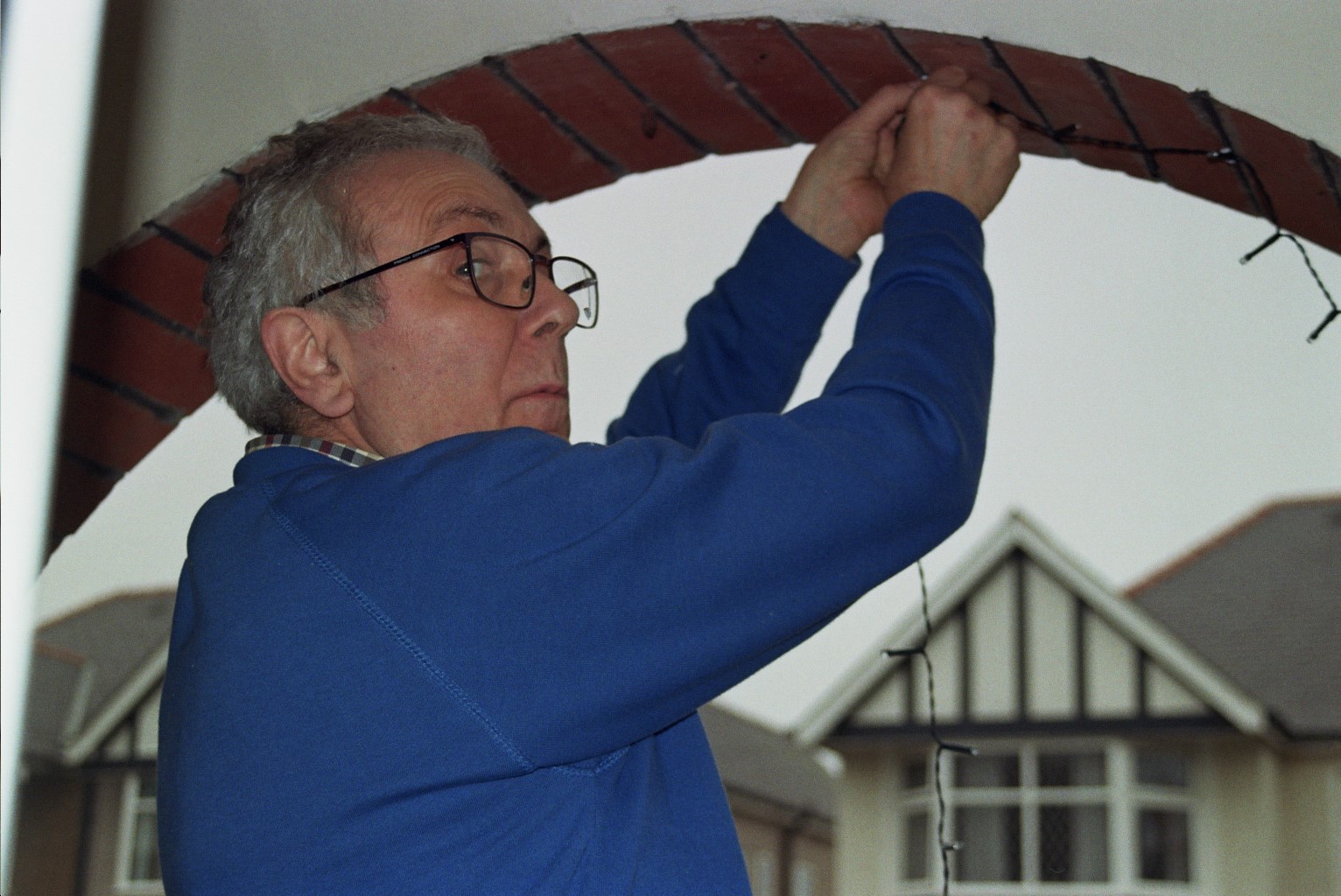
Dad, hanging the Christmas lights. Shot on Kodak ColorPlus 200


While I’m incredibly lucky to still have both of my parents, this book struck a cord with how my own Dad and I have come to understand each other as we age. I certainly had a tendency to need everything spelled out for me in absolute terms, too uncomfortable to sit with any kind of ambiguity, growing up. And I’ve never before seen such a beautiful depiction of a father and a son from different generations, simply seeing each other. Not everybody has what it takes to sit down and unpack a lifetime of impatience, every harsh word, and misunderstanding. But, it’s never too late to notice the small acts of grace and kindness we show each other. 

As you might notice, I’ve been on a bit of a non-fiction kick this month. It happens sometimes. And Moshin Zaidi’s A Dutiful Boy was another memoir I found quite touching. Again, there was a theme of alienation and the inevitable feeling of loneliness that can arrive when we don’t feel seen by our parents. I’ll come back to this when I talk about The Way Out by Tufayel Ahmed next month. 

Oxford graduate, criminal barrister and Stonewall trustee, Moshin Zaidi is the very definition of a high achiever. But, for me, it was descriptions of university counselling sessions and the overwhelming effort of walking back from feelings of hopelessness that made this book so relatable. A beautiful reminder of how despite our background, our childhood, our culture or our achievements, the universal human experience is how we recover from and reshape our pain.

Shot on Kodak ColorPlus 200 35mm

Right, if I’ve loved the last two, it’s probably time for a stinker.

Now, I’m absolutely being unfair here, because Jeremy William’s Climate Change Is Racist is a perfectly passable primer for those who truly have no clue and want somewhere gentle to begin. My issue was that, upon finishing, I really couldn’t decide what I’d learned and why I’d bothered to spend time (thankfully not money, it was a library read) with something that almost completely misses the mark. 

Despite the author acknowledging his own whiteness, there’s little depth to any probe into the racial aspects of climate change. Even more shocking, the book doesn’t really attempt to engage with the racial implications of capitalism and corporations exploiting the resources of the global south in any meaningful way. It’s not all bad, it just felt more like a walk through of keywords, without the glossary needed to help put them into context.

Finally, fiction. 

Alexa Donne’s Pretty Dead Queens was everything I wanted and needed. A mystery novel about a mystery novelist. When you come from a small town, reading about small towns can be a risky move. I often brace myself for a cringe-filled depiction of backwards bumpkins. But, this book hit every beat with enough heart, and careful planning, that I could revisit Ceceilia (our protagonist) over and over. Hopefully Donne will return to this town, but even if she doesn’t, I know I’ll love whatever she writes next. 

The small town I’m from – shot on Kodak ColorPlus 200

Everything I haven’t got round to covering in this post, I’ll revisit in December. Once the tree is up and I’m at least a stone heavier. 

Where you are

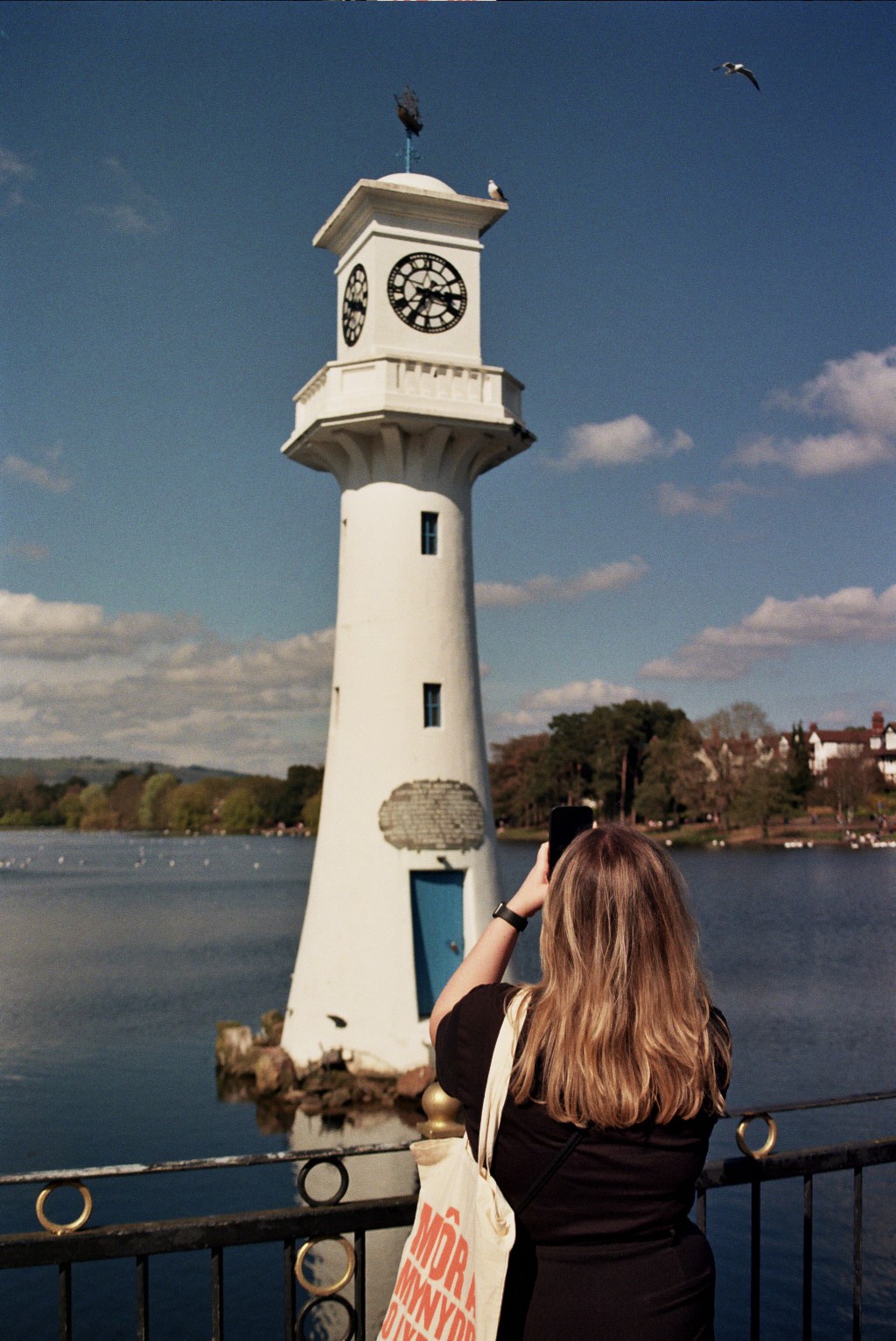
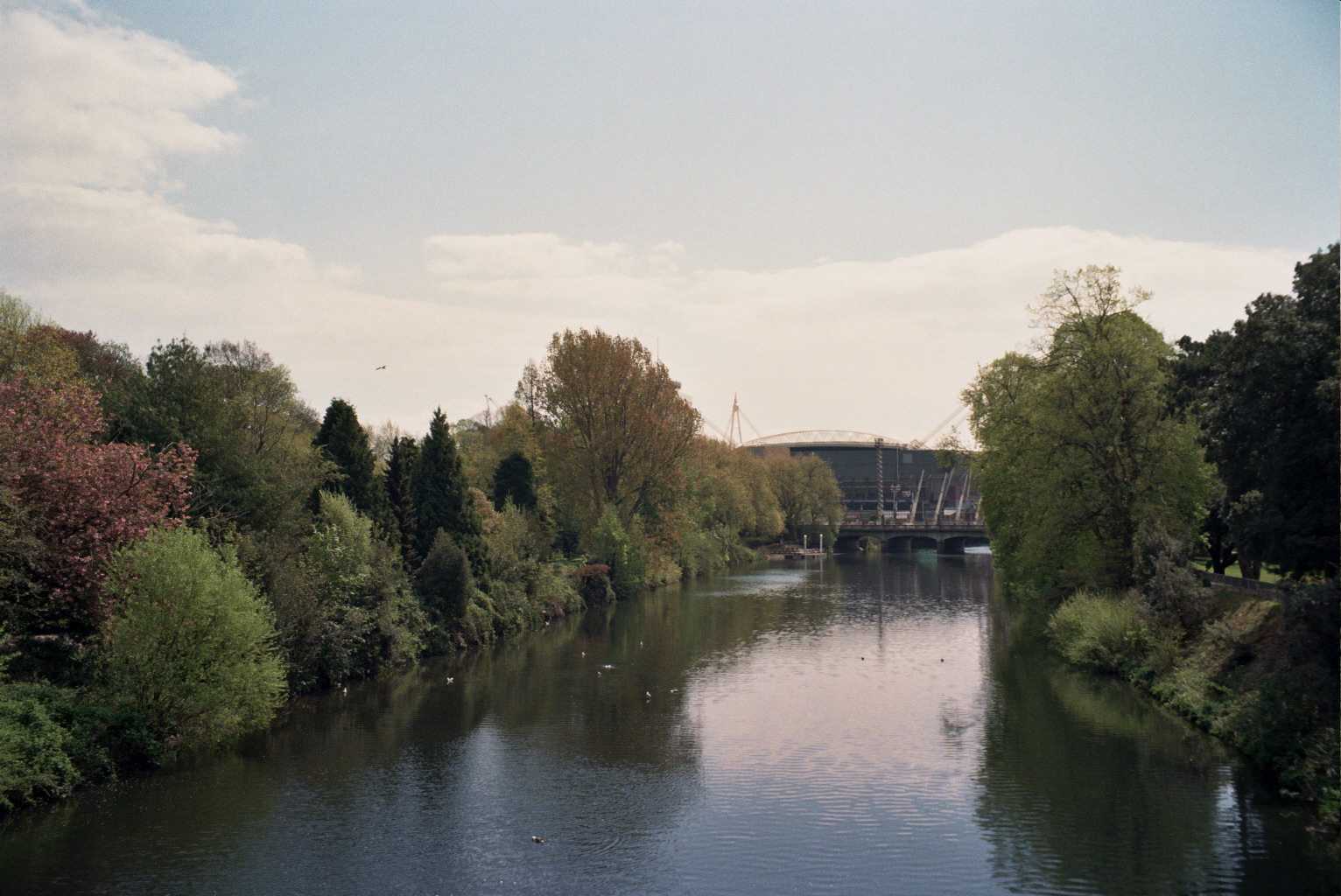
Cardiff, overlooked from Penarth. Kodak Color Plus 200 // 35mm.

Is there really anything romantic about the city anymore? Or has own online world made the metropolis moot?

I, myself, love the idea that I can go for a coffee at 9 o’clock at night. But that certainly doesn’t mean I ever go for one. For me, it almost boils down to a reassuring pleasure in knowing that I can quite literally hear life bustling on outside my open window, well into the early hours. Perhaps this background stimulation ties into a lifetime of friends convinced that my own constant need for movement is actually the presence of undiagnosed ADHD. The older I get, the more inclined I am to agree with them.

But actually knowing whether the city adds anything at all to my quality of life – or whether it in fact drains plenty away – is something I can no longer turn my head away from. Recently, at a wedding, our bustling table of vegans (don’t worry, we were happily grouped together) took a break from chatting about the uncomfortable strange yellow hue of soya milk, to discuss where we all came from. A topic I find as interesting as it is obligatory for any group of strangers forced to make small talk.

‘London,’ came the first response. In an accent as northern as, well, the woman herself. ‘From Leeds originally, obviously, but been in London for, God, nearly 7 years. I consider myself from London at this point.’

7 years is my own number too. I’ve lived in Cardiff since moving here for university in 2015. And I sort of understand her response, because my love was instant too. Even if, at times, tumultuous. Yet, all this time later, my go-to response remains ‘little town in North Wales,’ followed by the just as dependable ‘probably haven’t heard of it; Colwyn Bay?’

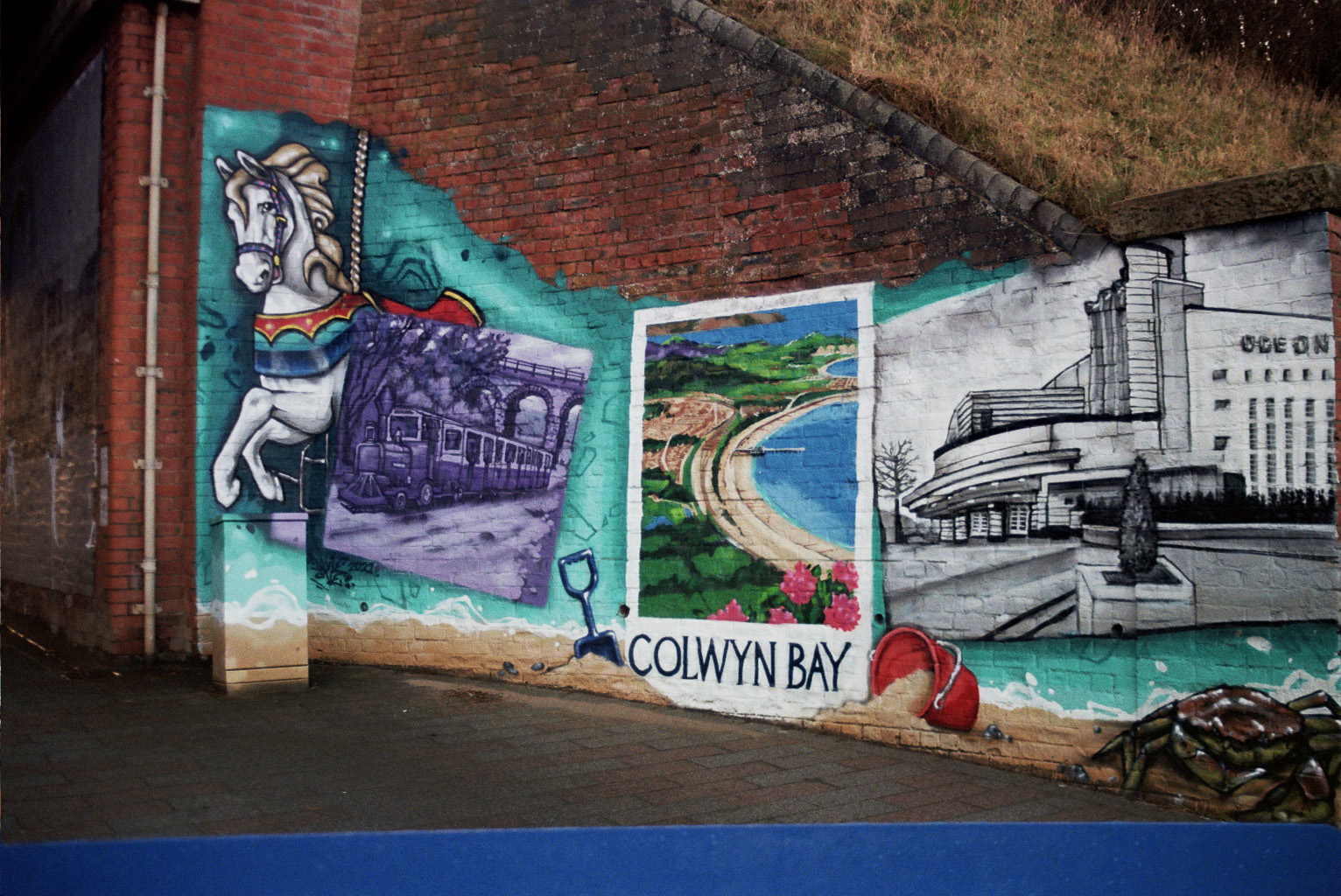
Mural by Colwyn Bay Pier. Kodak Color Plus 200 // 35mm.

I’ve always been conflicted about moving across the country. The main reason being how far away it is from my family. But, really, what it boils down to for me, is because of how obviously a product of my home I am. And when I say home, I of course mean ‘home’ home. I am consistently amazed by how late the buses run (and how cheap the price of all-day travel), by the amount of train stations in our part of South Wales, how late restaurants stay open, and the mere concept of Deliveroo. All things, those that grew up here, probably haven’t ever thought twice about.

There’s also a strange sort of longing I associate with coming from a small town. A nostalgia for dreaming about exactly what I have now. Without knowing a single detail of what it would actually be like. Because, when you’re not from a city, a city could be anything. A sort of frustration that something beautiful and exciting is going on elsewhere, while I stroll up an empty high street and eat chips on the beach.

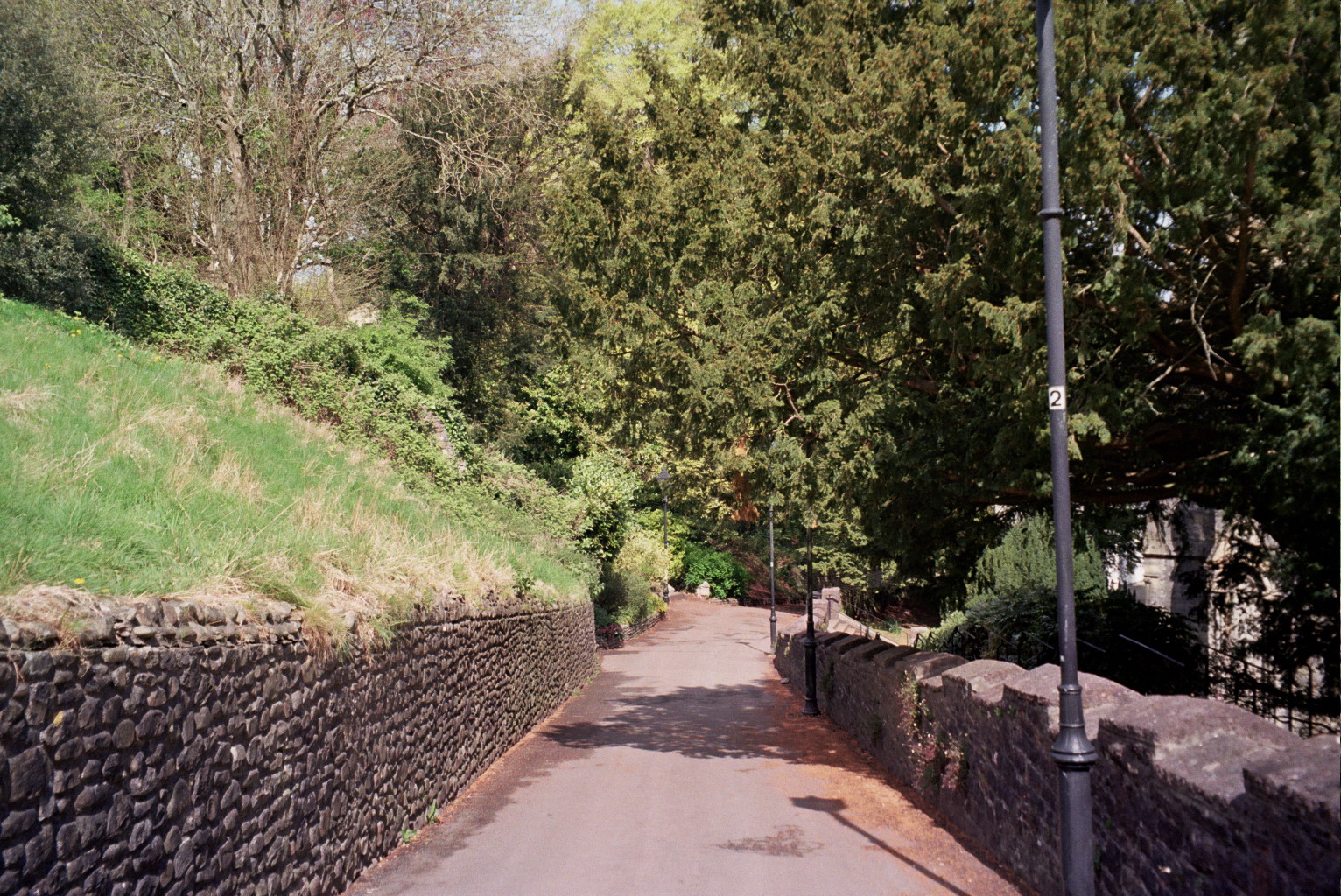
Footpath alongside Llandaff Cathedral, Cardiff. Kodak Color Plus 200 // 35mm.

So, perhaps that’s why our responses are so different. Leeds, at least to me, is just as much a city as anywhere with rising rents, accessible public transport and nightclubs. But for someone who grew up there? Well, it’s a lifetime of memories, happiness, trauma and frustrations, sure. But it certainly isn’t blind to the reality of everything that the urban demands. And while we can all long for something bigger and more exciting, it can’t be avoided that growing up in a city prepares you well for living there.

Growing up in a small town? It’s incubation. More thinking time than you can imagine. Time spent walking everywhere, time spent at bus stops, always waiting to see if something will change, and always knowing that it likely won’t. It’s being an adult and wondering how long you’ll last before heading home. And whether there’ll be anything left for you when you finally get there.

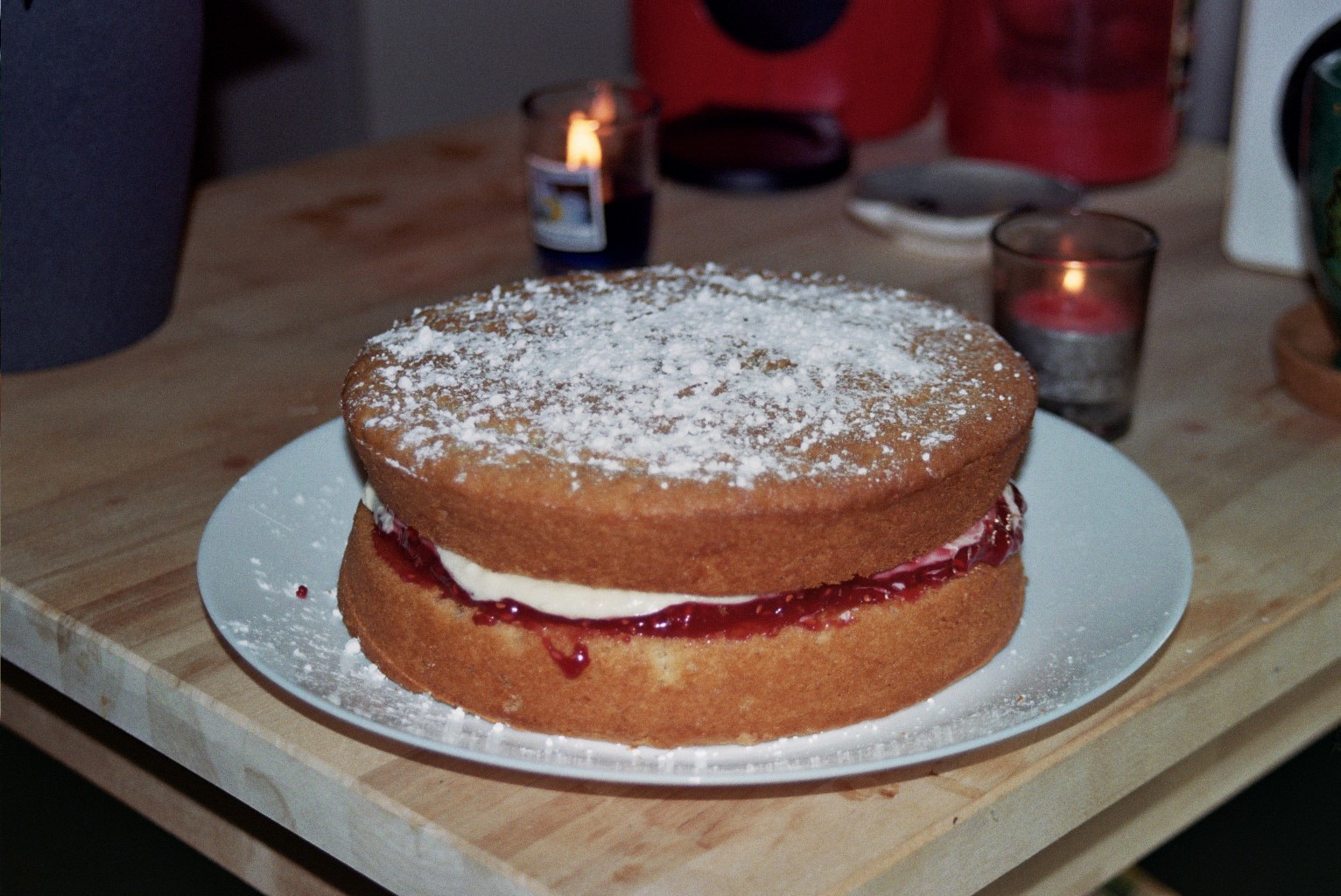
2021: The perfect sponge.

Image of a Victoria Sponge cake taken on Kodak ColorPlus 200 35mm Film. March 2021.

Starting the year, let’s be frank: things were pretty miserable.

Fresh off the back of the Christmas lockdown, plenty of us had spent the Christmas period unable to visit loved-ones. Or in my case, I’d been unable to raise my family’s blood pressure by suggesting that we pan-fry or roast the Brussel sprouts. And with the dull throb of wondering when we’d all be allowed to see each other again, I went to work on Christmas Eve. To a new job I hated more than I’d ever hated any job. Perhaps in part because – on paper at least – it was perfect. Or so everyone told me.

So, off I skipped to catch the bus – mask on and hands already tingling from the alcohol evaporating off them. Having managed to avoid doing so for 10 months already, catching Covid from someone on their way to do last-minute shopping would definitely have sped up the arrival of my P45. I’d have quit with 5 minutes of receiving the text to tell me my test was positive.

After finishing at midday, and being dropped off by a colleague who most certainly took pity on me, we went through the motions. By all means, an M&S Plant Kitchen Christmas is hardly a form of torture. But sat, just the two of us in our tiny flat in Roath, and a year of desperation to feel that safety of the house I grew up in, I would have given both arms to have been able to travel home. Home home.

Over 75s had just started to receive their vaccinations in Wales, and even on the 1st of January, I don’t think anyone could have anticipated how quickly we’d all end up with a needle in our arm and life once again, beginning to blossom.

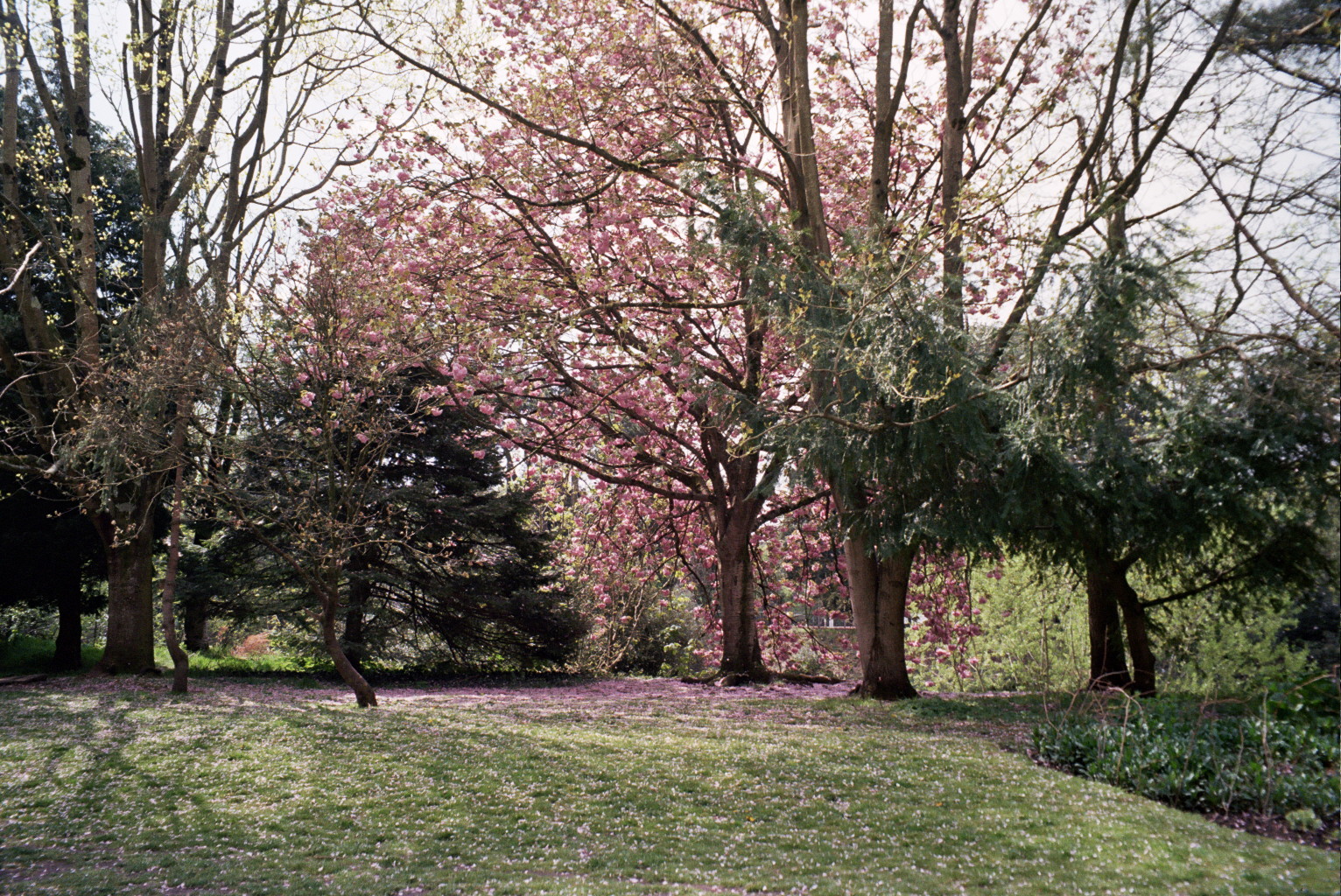
Photo of a cherry blossom tree in Bute Park. Shot on Kodak ColorPlus 200 35mm. April 2021

It was Monday the 18th of April when I had the phone call. One of the first properly warm days of the year. The saturation of everything switched from 0 to 100. The woman on the other end of the line asked if I could come down right away, explaining that the mass vaccination centre was in located in the old Toys-R-Us in the Bay.

Desperate for the call to end, so I could book my Uber ride, I was already stripping off my pyjamas. This meant that I was an hour early. So after chatting excitedly with a freshly-jabbed taxi driver who seemed more enthused than I was to be dropping me off for mine, I awkwardly spent 5 minutes trying to kill time in the huge Morrisons across the road from Vaccines-R-Us. Until I promptly gave up and checked in 50 minutes early. And you know what? It was to the eager smile of an admin worker who told me ‘yeah, just go straight through, they’ll do it now.’

Only a week later I was sat on the other end of a Microsoft Teams call for the friendliest job interview I’d ever had. Shops were busier, people were less miserable than I’d seen in at least 12 months – maybe longer. Every phone call with a friend, and there were many, were suddenly all about making plans. Not just the kind of plans we’d all made during the many lockdowns we’d been through, but proper, solid, concrete plans.

Of course, they were still punctuated with ‘Oh, we’ll be sensible. Obviously.’ But now we were jabbed. And the fear of losing even more than we already had, started to melt away like snow. Only the occasional glance out the window at the roof of the neighbour’s shed even reminded us it had ever been.

Bute Park April 2021. Taken on Kodak ColorPlus 200 35mm.

And in the rush of everybody’s hearts reopening to the possibility of normalcy. Every little niggling thought at the back of my mind told me if I didn’t deal with the weight of how unwell I’d become, not just over the last year of the pandemic, but really the last decade, I might as well stay home. Carry on pretending the world was closed for business.

For the first time I was able to see how much gloom had descended on my life, and how much disfunction I’d invited, relied upon, to make sense of it. The 2 o’clock cleaning to fend off waves of tears from the worry that, only exagerated by the pandemic, that my friends and loved ones would die, leaving me all alone. Or that I was heading for an early grave. That my worrying was going to send me to an early grave. Or my smoking. Or drinking.

By June, I had started a course of cognitive behavioural therapy, that felt as though I was most certainly drowning. Now on top of the worry I already knew about, was my lack of self-esteem to contend with. And the behaviours that ensued. The way I treated others, and the way I let them treat me. Even the way I facilitated and encouraged it.

Until a moment towards the end of the session, about four weeks in. When, as we wrapped things up for the week, as the counsellor did their standard warm down of well-dones and thank you for showing up did it occur to me, that I didn’t feel worse ending the call. And didn’t feel weepy. Just exhausted and grateful that I was floating. No flailing and splashing. No resistence.

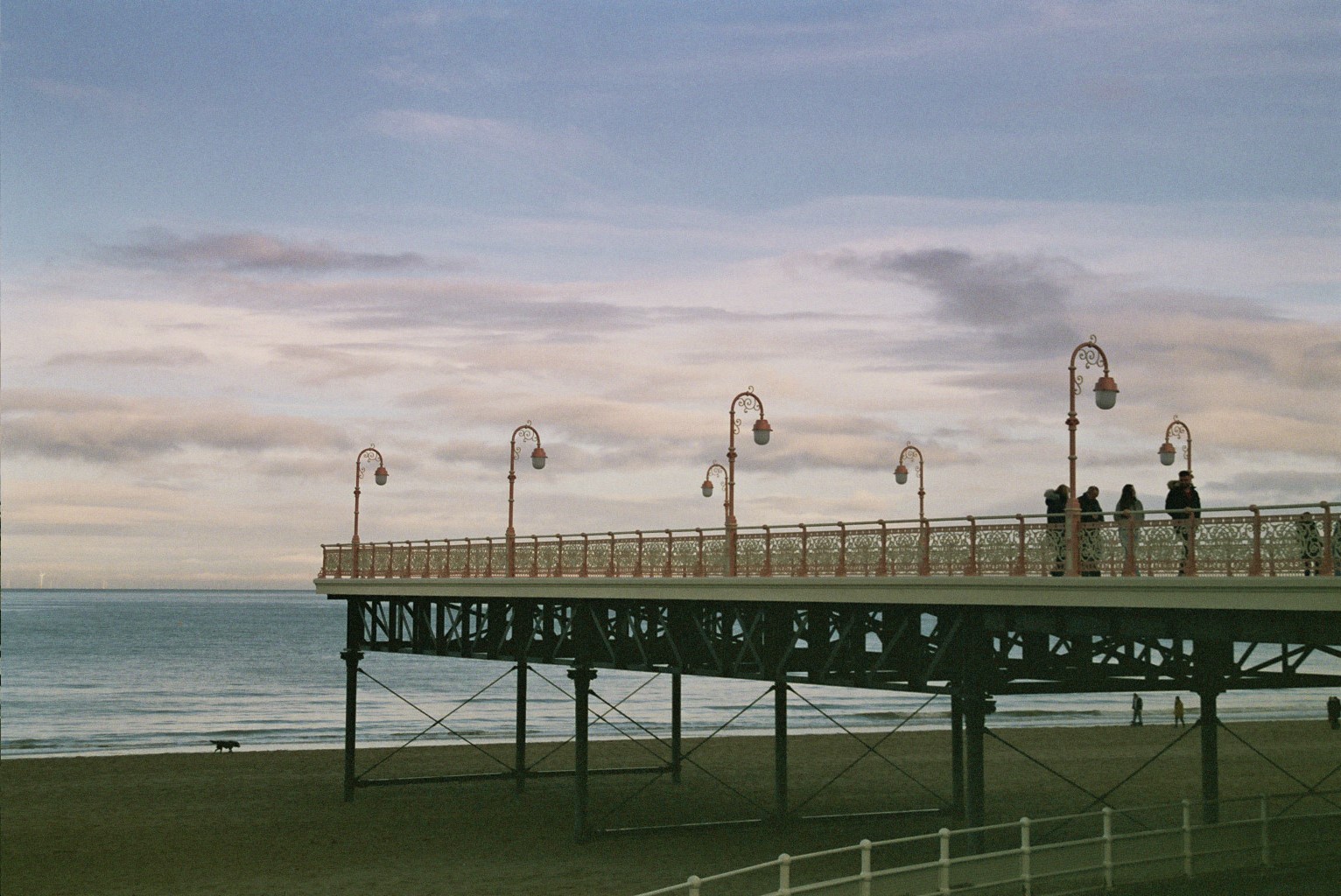
Colwyn Bay Pier, 2021. Shot on Superia Xtra-400 35mm.

As the weeks went on, floating mostly, though still splashing, I moved closer towards the finishing line. Now the line might have just been a course of counselling with a local charity, but getting there felt like stepping onto the most solid ground I’d been on in my adult life. And maybe it was because, at 25, my brain had finally stopped maturing (though the jury’s out on what good that does). Or maybe it was the most validating experience I believe a human can go through: having our worries and fears, and heartache and tears heard by someone who can explain back to us in scientific terms just how normal we really are.

We’re all formed by the context of our lives. And reformed. Forever malleable to the world we’re living in. And I think we even acknowledge this potential for change in the way we push forward with so much terror, everyday. How can I prove my usefulness to my boss, or my family? How can I keep moving so I don’t end up stuck, stagnant? Even if the place we’re stuck has everything we need to find proper world stopping joy. Like discovering you like tea as an adult. Or learning to bake the perfect vegan victoria sponge. Or going for a walk and listening to an audiobook.

For me it was learning to bake. A lot harder than you might think. Especially for someone who tries to cut corners on every meal by cooking in a single pan. But that was it. Slowing down enough to do something for pleasure rather than function was like learning to walk for the first time. Even eating was just a process by which I could end hunger and lower my stress response. The trial and error wasn’t a tear free experience either. But here’s the thing: we don’t often get things right on our first go. Not a cake recipe, or mindfulness.

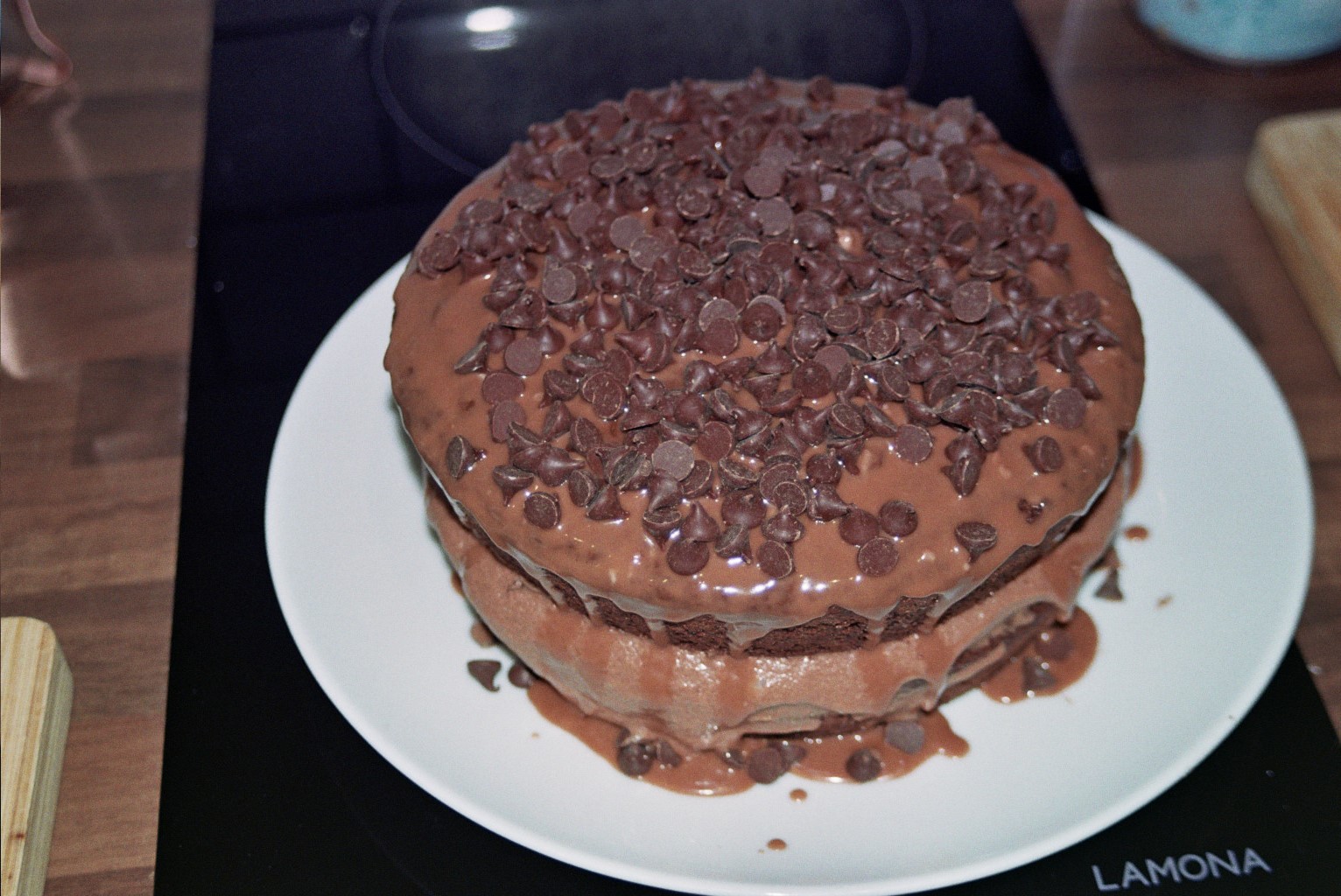
Disaster Cake – a Chocolate Buttercream Sponge – iced before the cake had cooled. Shot on Kodak ColorPlus 200, 35mm.

I think I’d decided on my 2022 goal, my forever goal, that first week of July. Four weeks into counselling. Go slow.